An article by Dr Edward Leatham, Consultant Cardiologist © 2026 E.Leatham
For busy people, or to tune in when on the move, Google Notebook AI audio podcasts are available for this story beneath.
For many women, menopause comes with more than just hot flushes, disturbed sleep and mood swings. One of the most frustrating changes women experience is a change in body shape. This isn’t just about weight gain and clothes becoming tighter, the hormonal changes which occur at the menopause are associated with a change in the way that body fat is stored, leading to more belly (abdominal) fat. There is a shift in fat from the hips to the waist.(1)
Women going through midlife, tend to gain on average around 0.5 kg per year. When we look at evidence on why women gain weight around menopause, we can see that the absolute weight gain is caused by non-hormonal factors, not menopause itself.(1)
However, the belly fat increase which occurs after menopause often signals a deeper problem: visceral fat. Declining oestrogen levels drive an increase in visceral fat, rising from about 5-8% of total body weight to 10-15%. At the same time, metabolic rate falls as lean muscle mass reduces. (2)
Visceral fat is a harmful type of fat stored deep within the abdominal cavity, wrapping around vital organs. High levels of visceral fat are associated with major health risks like heart disease and type 2 diabetes, as this fat actively releases chemicals which trigger inflammation.(3)
The good news? With the right tools including lifestyle support and early screening we can detect and reverse unhealthy visceral fat before it causes harm. Contrary to popular opinion, oestrogen therapy (HRT) does not cause women to gain weight and there is good evidence that Hormone replacement therapy (HRT), also known as Menopause Hormone Therapy (MHT) can prevent abdominal fat increasing after menopause.(2)
Why Visceral Fat Is So Dangerous
Visceral adipose tissue (VAT) is biologically active. It triggers inflammation, worsens blood sugar, disrupts hormones, and increases disease risk. After menopause, falling oestrogen levels make it more likely that fat will be stored around your middle, especially if sleep is poor and stress levels are high.
High levels of VAT are linked to:
- Increased risk of postmenopausal breast cancer(4)
- Higher rates of heart attacks, high blood pressure and stroke(5)
- Worsened blood sugar control and insulin resistance(6)
- Poor sleep quality and fatigue(7)
Critically, you don’t need to be overweight to have high visceral fat. Even women with a “normal” BMI can carry dangerous levels of VAT(4).

A Simple First Step: Waist-to-Height Ratio
A quick and reliable screening tool is the waist-to-height ratio:
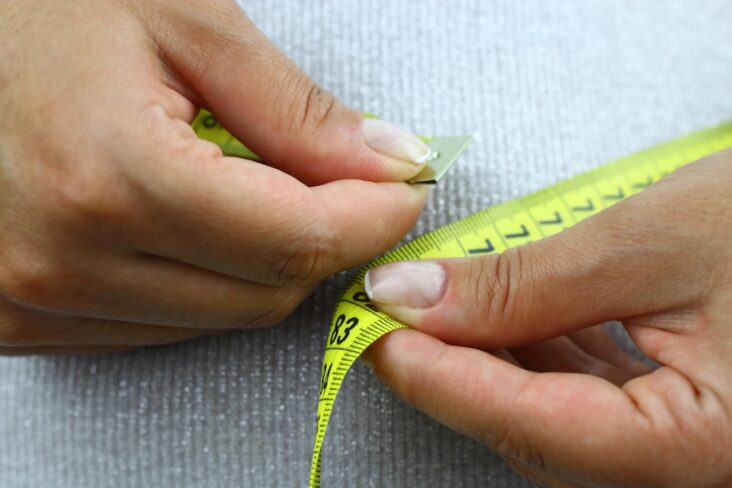
Measure your waist (use WHO method for accuracy), divide by your height. If the result is over 0.5, you may have excess VAT(8).
For example, a woman who is 160 cm tall should keep her waist under 80 cm. This ratio is more accurate than BMI for predicting future disease.
CT Scanning for VATI: A Clearer Picture
If your waist-height ratio is high, we may recommend a low-dose CT scan to measure your Visceral Adipose Tissue (VAT) from which we can calculate VAT Index (VATI) from VAT divided by height in metres, squared. This provides an accurate picture of how much harmful fat you’re carrying inside, not just what’s visible outside.
Research shows that a VAT over 95 cm2 or VATI above 25 cm²/m² in Caucasian women (lower in South Asian women) is linked to:
- Higher breast cancer risk(4)
- Increased cardiovascular risk
- Higher small dense LDL particle count (sdLDL)
- Higher likelihood of metabolic syndrome
Low dose CT scans used to measure visceral adipose tissue
Our non contrast CT, developed at VCL, is acquired using a very low dose of radiation averages 1mSv or 1/4 of the dose of a mammogram. The scan is aligned to be exactly 3 cm above the lowest margin of L3 vertebral body, so that it can be repeated after microdosed GLP treatment if necessary.
In the scan above of a 70 year old female lady with coronary artery disease, relatively harmless subcutaneous adipose tissue is shown in blue, while harmful visceral adipose tissue is shown in green. Her VAT is very high at 121 cm2 – VATI 53.8 cm2/m2 which indicates high metabolic risk from raised sdLDL and insulin; in contrast the scan below, from a of similar age and waist, the VAT is nearly half at measures 65.2 cm2, (VATI 25 cm2/m2) – which is a metabolically healthy value. For examples of VAT scans in men (who have much more VAT than women), see other example blog.
VATI Table
Table to show the ranges we use to allocate our patients into different VATI groups, by gender and ethnicity. We use the same values to define a VATI target, which can then be used to estimate a waist measurement required for a metabolically healthy VAT. For patients taking GLP medications, defining a target waist is extremely helpful.
What Role Does HRT Play?
HRT has been used for decades to treat menopause symptoms like hot flushes, disturbed sleep and mood swings. But there’s now strong evidence that HRT also helps reduce VAT and improve long-term health when used appropriately.
The evidence shows:
- Women on HRT may gain less visceral fat compared to non-users(9)
- Some HRT regimes can improve insulin sensitivity and improve cholesterol levels(6)
- HRT can improve sleep. Lack of sleep is a risk factor for weight gain and obesity. Good sleep promotes a healthy appetite by balancing the hunger-stimulating hormone ghrelin and the satiety hormone leptin(7).
- Starting HRT in healthy younger & midlife women may provide cardiovascular protection.(10,11)
And despite outdated fears, HRT does not increase overall mortality in women who start near menopause⁸. In many cases, it improves both quality and quantity of life.
However it is important to note that there is no evidence to initiate HRT to lower VAT, see editorial quote from 2022 “The balance of benefits and risks, however, does not support use of HRT for primary or secondary prevention of disease, and international guidance recommends against use of HRT without a clear indication (12).”
What About Breast Cancer Risk?
This is an important concern. Here’s what the data show:
- Combined HRT (oestrogen + progestogen) slightly increases breast cancer risk over time(13)
- Oestrogen-only HRT (used after hysterectomy) carries little increased risk (13)
- Natural progesterone (micronised) may be safer than synthetic forms of progestogen (13)
- High visceral fat and obesity may pose a bigger risk for breast cancer than HRT itself(4)
For many women, the small increased risk from HRT is outweighed by its benefits, especially when combined with lifestyle measures that reduce VAT.
The VAT-Targeted Reset Programme
If your VATI is elevated or waist-to-height ratio is high, we offer a tailored programme to lower VAT and improve long-term health. It includes:
1. Exercise: Strength Training + High-Intensity
Shown to reduce VAT more effectively than moderate activity(14).
To see what this entails see our 10 min strength training blog
2. Nutrition: Lower Carbs, More Protein
Protein supports muscle while reducing central fat. We use CGM (continuous glucose monitoring) and Dr Shape, a food analysis app to personalise food plans and reduce post-meal sugar spikes(15).
3. GLP-1 Mimetics (e.g. Semaglutide, Tirzepatide)
Used when lifestyle alone isn’t enough. These medications reduce visceral fat and support sustainable appetite control, especially in insulin-resistant women(16).
This isn’t a quick-fix diet—it’s a long-term health reset. Many women experience better sleep, more energy, less joint pain, improved blood pressure, and stronger muscles.
The latest UK guidance supports longer-term HRT use when symptoms persist and benefits outweigh risks. We believe that in some women it’s not only reasonable—but may be beneficial—to continue HRT to:
- Maintain metabolic health
- Support sleep, bone strength, and quality of life
- Prevent VAT accumulation during perimenopause and beyond
It’s time to move past one-size-fits-all advice. If you feel better on HRT and you’re reducing VAT, that’s meaningful.
Final Thoughts
You don’t need to wait until disease strikes to take action. The build-up of harmful visceral fat starts silently—but it can be measured, tracked and reversed.
We recommend:
✅ Early screening with waist-height ratio and low dose VATI if Height-to-Waist> 0.5
✅ High-intensity training and smart nutrition to reduce VAT
✅ Low-dose GLP-1 therapy, where appropriate, to accelerate VAT loss
✅ Monitoring and support from our expert clinical team
You deserve proactive, personalised care. Let us help you take control. Get in touch if you are interested in seeing our faculty for HRT advice or advice about a low dose VAT CT, Cardiac CT with FAI, or metabolic health assessment
References
- Davis SR, Castelo-Branco C, Chedraui P, Lumsden MA, Nappi RE, Shah D, et al. Understanding weight gain at menopause. Climacteric [Internet]. 2012 Oct [cited 2026 Feb 4];15(5):419–29. Available from: http://www.tandfonline.com/doi/full/10.3109/13697137.2012.707385
- Davis SR, Castelo-Branco C, Chedraui P, Lumsden MA, Nappi RE, Shah D, et al. Understanding weight gain at menopause. Climacteric [Internet]. 2012 Oct [cited 2026 Feb 4];15(5):419–29. Available from: http://www.tandfonline.com/doi/full/10.3109/13697137.2012.707385
- Menopause and Weight Gain: Why It Happens & How To Stop It [Internet]. [cited 2026 Feb 4]. Available from: https://zoe.com/learn/menopause-weight-gain?srsltid=AfmBOorQMWRSsI14crXO7xZaJLeXbPI9QdLdfJ7PQ4CcGDYb36ihCddf
- Iyengar NM, Arthur R, Manson JE, Chlebowski RT, Kroenke CH, Peterson L, et al. Association of Body Fat and Risk of Breast Cancer in Postmenopausal Women With Normal Body Mass Index: A Secondary Analysis of a Randomized Clinical Trial and Observational Study. JAMA Oncol. 2019 Feb 1;5(2):155–63.
- Kazeminasab F, Mahboobi MH, Mohebinejad M, Nojoumi M, Belyani S, Camera DM, et al. The Impact of Exercise Training Plus Dietary Interventions on Ectopic Fat in Population with Overweight/Obesity with and without Chronic Disease: A Systematic Review, Meta-analysis, and Metaregression of Randomized Clinical Trials. Curr Dev Nutr [Internet]. 2025 Apr 1 [cited 2026 Feb 4];9(4):104574. Available from: https://www.sciencedirect.com/science/article/pii/S2475299125000332
- Sites CK, L’Hommedieu GD, Toth MJ, Brochu M, Cooper BC, Fairhurst PA. The effect of hormone replacement therapy on body composition, body fat distribution, and insulin sensitivity in menopausal women: a randomized, double-blind, placebo-controlled trial. J Clin Endocrinol Metab. 2005 May;90(5):2701–7.
- Baker FC, de Zambotti M, Colrain IM, Bei B. Sleep problems during the menopausal transition: prevalence, impact, and management challenges. Nat Sci Sleep [Internet]. 2018 Feb 9 [cited 2026 Feb 4];10:73–95. Available from: https://pmc.ncbi.nlm.nih.gov/articles/PMC5810528/
- Ashwell M, Gibson S. Waist-to-height ratio as an indicator of ‘early health risk’: simpler and more predictive than using a ‘matrix’ based on BMI and waist circumference. BMJ Open. 2016 Mar 14;6(3):e010159.
- Papadakis GE, Hans D, Rodriguez EG, Vollenweider P, Waeber G, Marques-Vidal P, et al. Menopausal Hormone Therapy Is Associated With Reduced Total and Visceral Adiposity: The OsteoLaus Cohort. J Clin Endocrinol Metab [Internet]. 2018 May 1 [cited 2026 Feb 4];103(5):1948–57. Available from: https://doi.org/10.1210/jc.2017-02449
- Manson JE, Aragaki AK, Rossouw JE, Anderson GL, Prentice RL, LaCroix AZ, et al. Menopausal Hormone Therapy and Long-term All-Cause and Cause-Specific Mortality: The Women’s Health Initiative Randomized Trials. JAMA [Internet]. 2017 Sep 12 [cited 2026 Feb 4];318(10):927–38. Available from: https://doi.org/10.1001/jama.2017.11217
- Mukherjee A, Davis SR. Update on Menopause Hormone Therapy; Current Indications and Unanswered Questions. Clin Endocrinol (Oxf). 2025 Jan 29;
- Hamoda H, Moger S. Looking at HRT in perspective. BMJ [Internet]. 2022 Jun 15 [cited 2026 Feb 5];o1425. Available from: https://www.bmj.com/lookup/doi/10.1136/bmj.o1425
- Type and timing of menopausal hormone therapy and breast cancer risk: individual participant meta-analysis of the worldwide epidemiological evidence. The Lancet [Internet]. 2019 Sep 28 [cited 2026 Feb 4];394(10204):1159–68. Available from: https://www.thelancet.com/journals/lancet/article/PIIS0140-6736(19)31709-X/fulltext
- Nicklas BJ, Wang X, You T, Lyles MF, Demons J, Easter L, et al. Effect of exercise intensity on abdominal fat loss during calorie restriction in overweight and obese postmenopausal women: a randomized, controlled trial. Am J Clin Nutr. 2009 Apr;89(4):1043–52.
- Wolever TM, Zurbau A, Koecher K, Au-Yeung F. The Effect of Adding Protein to a Carbohydrate Meal on Postprandial Glucose and Insulin Responses: A Systematic Review and Meta-Analysis of Acute Controlled Feeding Trials. J Nutr. 2024 Sep;154(9):2640–54.
- Wadden TA, Bailey TS, Billings LK, Davies M, Frias JP, Koroleva A, et al. Effect of Subcutaneous Semaglutide vs Placebo as an Adjunct to Intensive Behavioral Therapy on Body Weight in Adults With Overweight or Obesity: The STEP 3 Randomized Clinical Trial. JAMA [Internet]. 2021 Apr 13 [cited 2026 Feb 4];325(14):1403–13. Available from: https://doi.org/10.1001/jama.2021.1831
Related blogs
- Why everyone is talking about VAT
- How to Measure Your Waist
- Sarcopenia: Are We Diagnosing the Correct Muscle Problem?
- Medical imaging is the only accurate way to assess body composition
- Smart body composition scales: helpful metabolic tool—or misleading distraction?
- How to Lose Visceral Adipose Tissue (VAT) and Improve Metabolic Health: A Guide to Sustainable Weight Loss
- Microdose GLP-1 Mimetics Reduce Visceral Adipose Tissue