
Three game changing technologies in 2023
As we begin 2024, I want to highlight three groundbreaking developments from 2023 that promise a brighter future for healthcare, two of which leverage the power of artificial intelligence (AI).
Providing independent clinical excellence since 2005

Posted on Monday October 13, 2025 in Muscle, Protein and Metabolic Resilience
An article written by Dr Edward Leatham, Consultant Cardiologist © 2025 E.Leatham
For busy people, or to tune in when on the move, Google Notebook AI audio podcast and an explainer slide show are available for this story beneath.
When patients ask how to “burn belly fat,” what they usually mean is how to lose visceral fat — the deep, internal fat that surrounds the liver, pancreas, and heart. This is the fat that drives inflammation, insulin resistance, and cardiovascular risk.
While many people assume that long, steady aerobic exercise like walking or cycling is the best route to fat loss, evidence increasingly shows that high-intensity interval training (HIIT) — short bursts of near-maximal effort — is one of the most effective ways to reduce visceral adipose tissue (VAT).
Let’s explore why.
Visceral fat is not just stored energy — it is a metabolically active organ that releases inflammatory cytokines (IL-6, TNF-α) and free fatty acids directly into the portal circulation. This overloads the liver, impairs insulin sensitivity, and drives a self-reinforcing cycle of fat accumulation.
HIIT interrupts this cycle by dramatically improving insulin sensitivity and glucose uptake in skeletal muscle — particularly in the large lower-limb muscles of the thighs and glutes. A single 20-minute session of HIIT can activate GLUT-4 transporters in muscle cells for up to 24–48 hours, drawing glucose out of the bloodstream and away from storage in the liver and visceral fat depots.
Unlike steady-state aerobic exercise, HIIT operates primarily in the anaerobic zone. During intense effort, oxygen supply can’t keep up with muscle demand, forcing the body to rely on stored glycogen and the phosphocreatine (PCr) system for energy.
This temporary oxygen debt triggers powerful metabolic adaptations:
Visceral adipocytes are rich in β-adrenergic receptors, which respond strongly to adrenaline and noradrenaline. These hormones are released during short bursts of intense exercise — precisely what happens in HIIT.
Subcutaneous fat, by contrast, is less responsive. This explains why HIIT preferentially mobilises VAT even when overall body weight changes little. You can “stay the same weight” but still dramatically improve your metabolic profile as visceral fat shrinks and muscle mass increases.
Skeletal muscle is the main site of glucose disposal in the human body. Every gram of additional muscle acts as a metabolic sink for glucose and fatty acids.
HIIT, even in short sessions, preserves and increases lean muscle mass. This is crucial because:
In other words, HIIT doesn’t just burn calories during exercise — it changes your physiology so that fat is less likely to return.
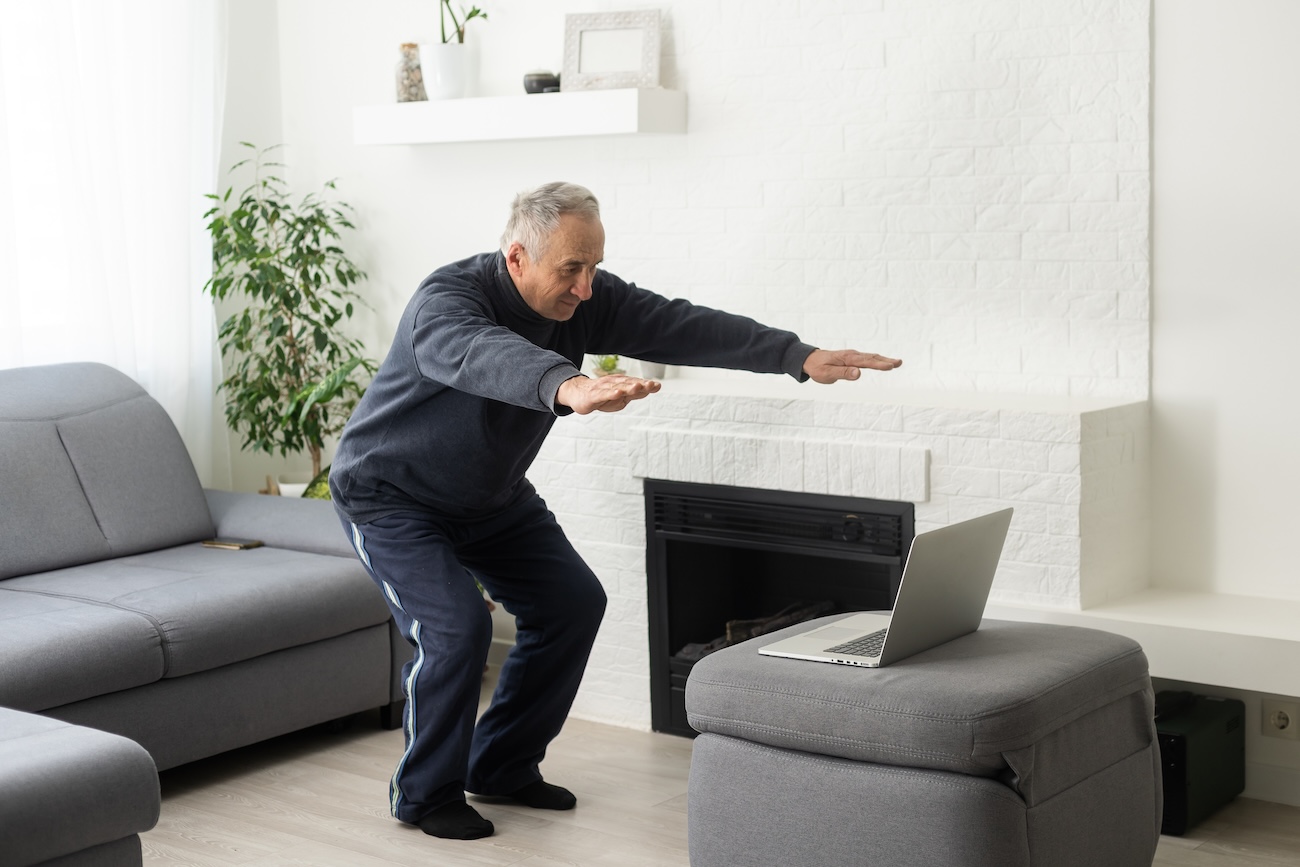
A major advantage of HIIT is that it can be completed in 10–20 minutes, using nothing more than body weight, resistance bands, or simple movements like squats, push-ups, and sprints.
For busy professionals or older adults, this short-duration, high-reward format improves adherence — and consistency is the ultimate determinant of visceral fat loss.
Even two to three HIIT sessions per week can reduce VAT by up to 20–30% in clinical studies, often outperforming traditional aerobic programs of much longer duration.
HIIT does more than alter body composition. It resets inflammatory tone. Studies show that reducing visceral fat through HIIT leads to lower high-sensitivity CRP, reduced interleukin-6, and improved endothelial function.
This is why patients often describe feeling “lighter” and “sharper” even before major weight changes appear — the improvement is cellular, not cosmetic.
If you’re new to HIIT, start gradually. The goal is intensity, not exhaustion.
A typical starter routine might include:
Always warm up and cool down. People with known cardiovascular disease or hypertension should discuss new exercise plans with their clinician — HIIT can be safely tailored for all levels, including cardiac rehab, when properly supervised.
HIIT works because it reprogrammes metabolism. It improves insulin sensitivity, activates fat-mobilising hormones, and preferentially burns visceral fat — the type that truly matters for long-term health.
It’s not about chasing calorie counts or spending hours on a treadmill. It’s about stimulating the system — challenging muscle and mitochondria to work harder, recover stronger, and remodel energy use at the cellular level.
In short, HIIT trains your body to burn fat even when you’re not exercising — and visceral fat is the first to go.
As we begin 2024, I want to highlight three groundbreaking developments from 2023 that promise a brighter future for healthcare, two of which leverage the power of artificial intelligence (AI).
Atrial fibrillation is a common but manageable heart rhythm condition. Understanding how it affects your heart rate, particularly during illness, empowers you to monitor changes early and work proactively with your doctor. With the right knowledge and self-care, you can confidently take control of your heart health.

One of the greatest challenges in the online world is investigator bias. Any “expert” with a strong conviction — whether pro- or anti-statin — can easily find studies that appear to confirm their view. The internet is full of such cherry-picked data. When presented with confident authority, this can sound utterly convincing to a lay audience. The reality is that true medical understanding does not come from one paper, one YouTube video, or one self-proclaimed authority.