An article written by Dr Edward Leatham, Consultant Cardiologist © 2025 E.Leatham
Tags: Cholesterol, Coronary heart disease, LDL, NH1 search website using Tags to find related stories.
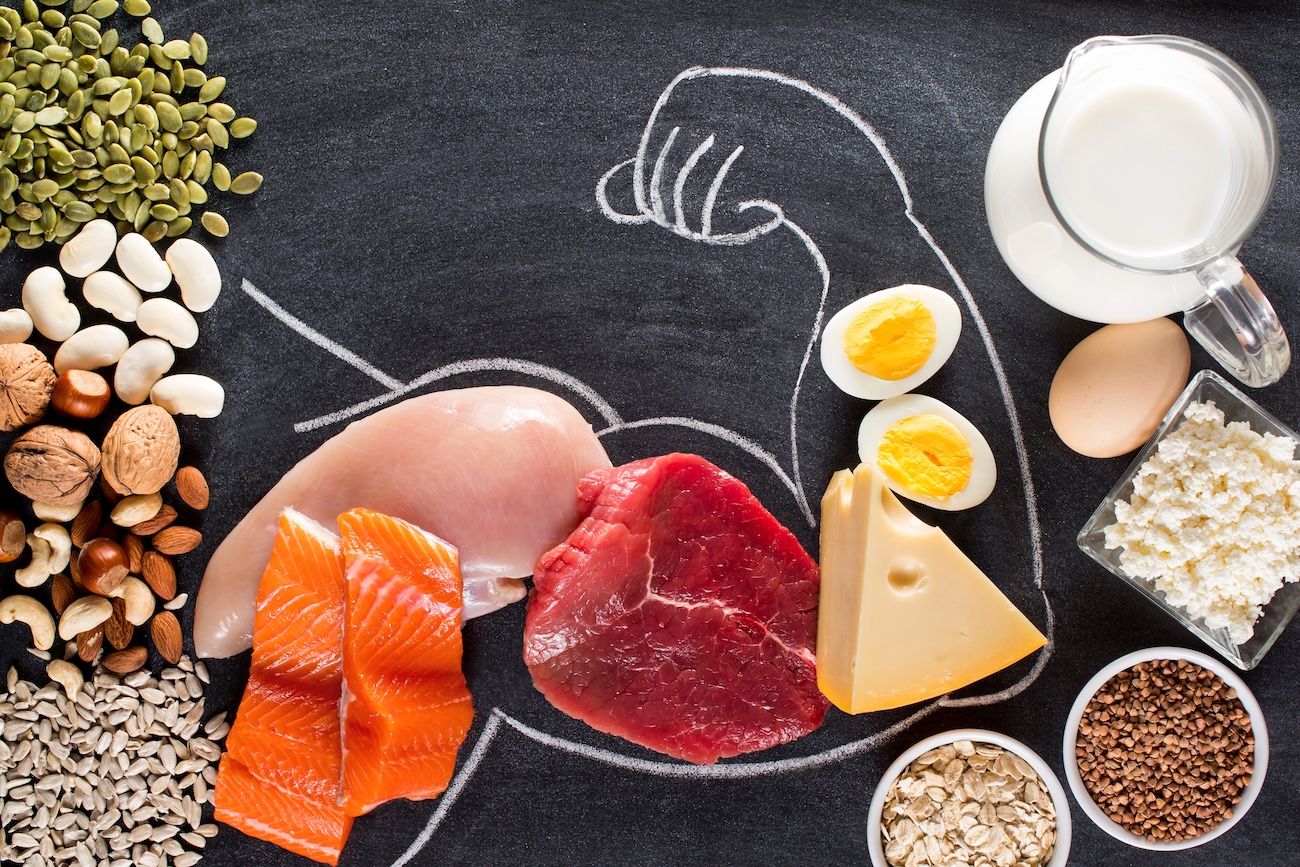
Most people associate protein with gym culture — shakes, weights, muscle-building. But for anyone interested in healthy ageing, metabolic resilience, fat loss, and long-term independence, protein deserves far more attention. Adequate daily protein intake is one of the most powerful and controllable levers we have for preserving muscle mass and reducing visceral fat — especially as we get older.
A growing body of research now confirms an uncomfortable truth: the current recommended dietary allowance (RDA) of 0.8 g/kg/day is insufficient for maintaining muscle mass or metabolic health in adults and the shortfall becomes more harmful with age.
This article explains why protein needs rise over time, how inactivity accelerates muscle loss, why calculating protein using your lean or target body weight is crucial, and why anyone trying to reduce visceral adipose tissue (VAT) must deliberately build and feed their muscle.
1. The RDA is a minimum, not a target
The protein RDA was derived from nitrogen balance studies that underestimate true physiological needs. More accurate stable isotope tracer studies show that adults require 1.2–1.6 g/kg/day simply to remain in neutral protein balance — meaning no daily loss of lean tissue (1).
Because the body has no storage pool for amino acids, any deficit must be covered by breaking down muscle. Even small shortfalls, accumulated over years, contribute to sarcopenia and frailty.
2. Ageing and inactivity blunt the muscle-building response
As we age, muscles respond less efficiently to dietary protein — a phenomenon known as anabolic resistance. Compared with younger adults, older individuals experience:
- a smaller increase in muscle protein synthesis from the same protein dose
- higher per-meal thresholds to trigger an anabolic response
- faster losses of muscle during inactivity
Crucially, inactivity is the major driver, not age alone. Studies immobilising a single limb show that even young adults develop anabolic resistance within days (2). The good news: resistance training restores anabolic sensitivity at any age.
3. Sarcopenia develops in steps — and becomes irreversible without intervention
Muscle loss across the lifespan does not occur smoothly. It happens in sudden drops after:
- illness
- hospitalisation
- joint injury
- periods of bed rest
- COVID, flu, or even a sedentary month
Younger adults regain lost muscle relatively easily. Adults over 60 often do not — returning only partway to baseline. Over years, these “hits” accumulate until individuals cross the frailty threshold, where everyday tasks such as climbing stairs or rising from a chair become difficult.
Adequate protein and resistance training are the strongest interventions we have to prevent or delay that decline.
4. Why losing visceral fat (VAT) depends on building muscle
A huge number of people are looking to lose weight as part of general lifestyle improvement. However from the medical perspective, the main priority in our cardiac patients is to recommend and assist in achieving metabolically healthy visceral adipose tissue (VAT) — the fat packed around the abdominal organs, which is harmful. It raises inflammation, fuels hypertension, insulin resistance, worsens glucose regulation, and increases risk of atrial fibrillation, coronary disease, stroke and dementia.
Many patients attempt to “lose VAT” through calorie restriction, either with, or without GLP-mimetic injections — but dieting or taking the ‘skinny jab’, without resistance training often leads to more muscle loss than fat loss. Metabolism slows, strength declines, and VAT becomes stubborn.
VAT loss requires muscle gain.
Here’s why:
- Muscle is the primary site of glucose uptake — improving insulin sensitivity.
- Improved insulin sensitivity lowers insulin levels, reducing VAT storage signals.
- Trained muscle increases mitochondrial fat oxidation, making VAT more accessible as a fuel source.
- Greater lean mass raises resting metabolic rate, helping sustain fat loss without metabolic slowdown.
In short:
Muscle acts as the metabolic engine that burns VAT.
Resistance training builds the engine.
Protein fuels the engine.
This is why older adults, sedentary individuals, and anyone on GLP-1 therapy (who may undereat protein) must be deliberate with both strength training and adequate protein intake to ensure that VAT — not muscle — is what they lose.
5. How much protein do we actually need?
Minimum to avoid muscle loss:
1.2 g/kg/day
Optimal for maintaining and building muscle:
1.6 g/kg/day
Higher intakes for active older adults or those losing weight:
1.6–2.2 g/kg/day
A major meta-analysis of 49 trials shows that combining resistance training with higher protein intake (up to 1.6 g/kg/day) increases lean mass by ~27% and strength by ~10% compared with training alone (3).
Above 1.6 g/kg/day, benefits continue but become smaller — useful for athletes or those deliberately “banking” muscle for later life.
6. If you are overweight, calculate protein from lean or target weight — not actual weight
Protein needs scale with lean mass, not with excess fat. Calculating protein from current weight can greatly overestimate requirements and discourage adherence.
Instead, use:
- target weight (your likely weight with healthy body composition), or
- Low dose CT VAT scan
- DEXA-measured lean mass if available.
Example
A man weighing 110 kg, with a realistic healthy target weight of 80 kg:
- Correct calculation (using target weight):
1.6 g/kg × 80 kg = 128 g/day - Incorrect (using current weight):
1.6 g/kg × 110 kg = 176 g/day
The target-weight approach is physiologically accurate and far more achievable.
This method is clinically validated and used in sports nutrition, obesity medicine, and geriatric practice (4).
7. Protein needs rise during fat loss, VAT reduction, or GLP-1 therapy
During calorie restriction, the body becomes more inclined to break down muscle for energy. Higher protein intake:
- preserves lean mass
- maintains metabolic rate
- supports fat loss
- reduces hunger
- ensures VAT — not muscle — is lost
Research shows that ≥2.0 g/kg/day (using target weight) better preserves muscle during weight loss than lower intakes (5). This is especially important for older adults and anyone on GLP-1 medications, which suppress appetite and reduce spontaneous protein intake.
8. Protein + resistance training = the non-negotiable duo
Protein provides the raw material; resistance training provides the signal. Together they:
- reverse anabolic resistance
- maintain bone and joint support
- improve insulin sensitivity
- reduce VAT
- prevent frailty
- preserve independence
Yet only ~22% of older adults meet basic strength-training recommendations (6). Improving this single behaviour could have more impact on healthy ageing than almost any medication.
9. Practical guidelines (using target weight)
| Goal | Daily protein target | Notes |
| Avoid muscle loss | 1.2 g/kg/day | Minimum for adults over 50 |
| Optimal for healthy ageing | 1.6 g/kg/day | Supports mobility and strength |
| Build/maintain muscle | 1.6–2.2 g/kg/day | Especially important with training |
| VAT reduction or GLP-1 therapy | ≥2.0 g/kg/day | Essential to preserve muscle during fat loss |
Take-home message
Protein intake becomes more important, not less, as we age. Declining anabolic sensitivity, reduced appetite, and repeated catabolic events all work against the preservation of muscle — unless we intervene deliberately.
If you want to maintain strength, mobility, metabolic health, and independence into later life, the formula is simple:
- Eat sufficient high-quality protein every day
- Calculate protein based on target (lean) body weight
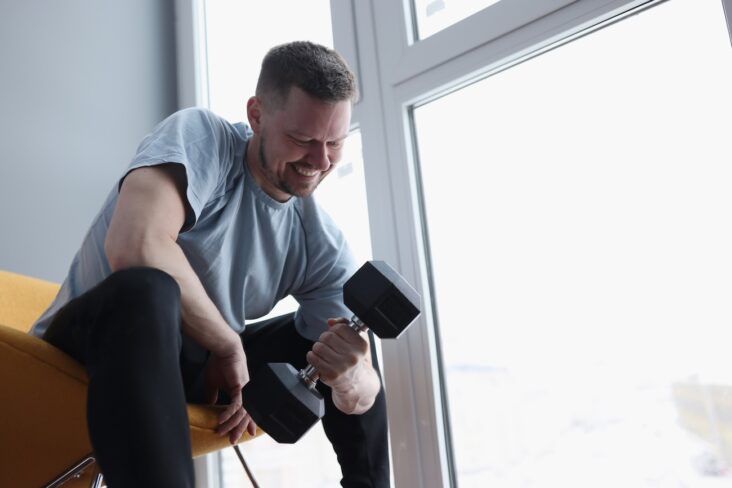
- Perform resistance training at least twice per week
- Avoid long periods of inactivity
Build and feed your muscle now, and your future self — aged 70, 80, or 90 — will thank you.
References
- Traylor DA, Gorissen SHM, Phillips SM. Perspective: Protein Requirements and Optimal Intakes in Aging: Are We Ready to Recommend More Than the Recommended Daily Allowance? Adv Nutr [Internet]. 2018 May [cited 2025 Dec 7];9(3):171–82. Available from: https://pmc.ncbi.nlm.nih.gov/articles/PMC5952928/
- HOLWERDA AM, WEIJZEN MEG, ZORENC A, SENDEN J, JETTEN GHJ, HOUBEN LHP, et al. One Week of Single-Leg Immobilization Lowers Muscle Connective Protein Synthesis Rates in Healthy, Young Adults. Med Sci Sports Exerc [Internet]. 2024 Apr [cited 2025 Dec 7];56(4):612–22. Available from: https://pmc.ncbi.nlm.nih.gov/articles/PMC12376804/
- Morton RW, Murphy KT, McKellar SR, Schoenfeld BJ, Henselmans M, Helms E, et al. A systematic review, meta-analysis and meta-regression of the effect of protein supplementation on resistance training-induced gains in muscle mass and strength in healthy adults. Br J Sports Med [Internet]. 2018 Mar [cited 2025 Dec 7];52(6):376–84. Available from: https://pmc.ncbi.nlm.nih.gov/articles/PMC5867436/
- Kokura Y, Ueshima J, Saino Y, Maeda K. Enhanced protein intake on maintaining muscle mass, strength, and physical function in adults with overweight/obesity: A systematic review and meta-analysis. Clin Nutr ESPEN [Internet]. 2024 Oct 1 [cited 2025 Dec 7];63:417–26. Available from: https://www.clinicalnutritionespen.com/article/S2405-4577(24)00176-1/abstract
- Antonio J, Ellerbroek A, Silver T, Orris S, Scheiner M, Gonzalez A, et al. A high protein diet (3.4 g/kg/d) combined with a heavy resistance training program improves body composition in healthy trained men and women–a follow-up investigation. J Int Soc Sports Nutr. 2015;12:39.
- Hyde ET, Whitfield GP, Omura JD, Fulton JE, Carlson SA. Trends in Meeting the Physical Activity Guidelines: Muscle-Strengthening Alone and Combined With Aerobic Activity, United States, 1998–2018. J Phys Act Health [Internet]. 2021 Aug 1 [cited 2025 Dec 7];18(Suppl 1):S37–44. Available from: https://pmc.ncbi.nlm.nih.gov/articles/PMC11000248/
Further reading
- A high-protein diet for reducing body fat: mechanisms and possible caveats
- Visceral Fat, Mitochondria, and the Energy Trap: Why We Store Fat Where We Shouldn’t
- Paper E. Leatham