An article by Dr Edward Leatham, Consultant Cardiologist © 2025 E. Leatham
This article explores carbohydrates, visceral fat (VAT), and why adding fats to food may lower your cardiometabolic risk.
Short on time? Listen to the 15-minute VAT-Trap podcast summary of this article while you walk, drive, or train.
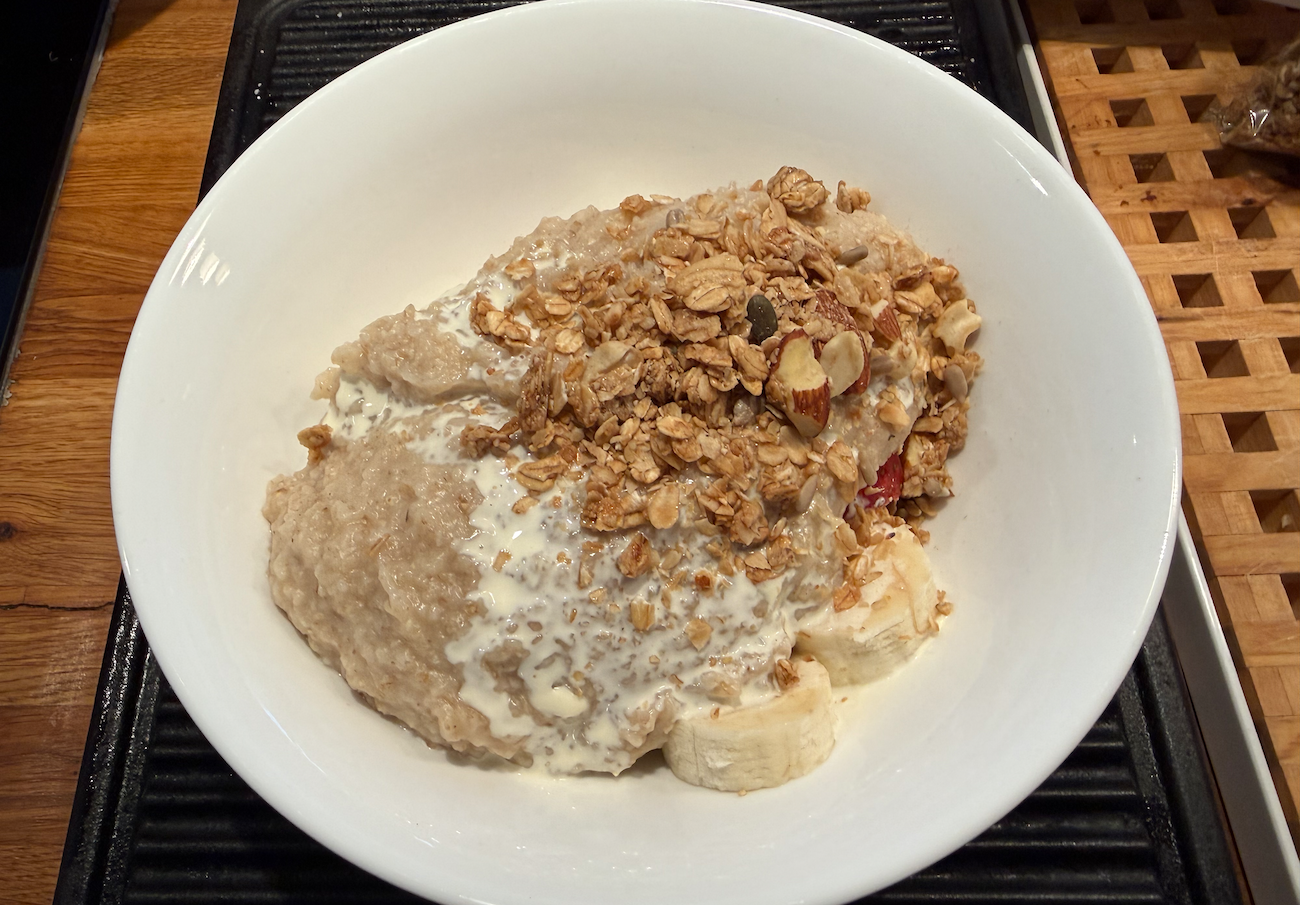
Porridge has earned its reputation as one of the healthiest breakfasts available. Oats are rich in soluble fibre, particularly beta-glucan, which has consistently been shown to reduce LDL cholesterol and contribute to cardiovascular risk reduction(1). For patients seeking a heart-healthy option, porridge is far superior to refined cereals, pastries or white toast.
So why would a cardiologist add double cream?
At first glance, it appears contradictory. For decades, we have advised patients to reduce saturated fat intake in order to protect the heart. The idea of deliberately adding cream to breakfast seems to undermine that message.
Yet when we look beyond simplistic dietary dogma and examine glucose physiology, insulin biology and lipoprotein remodelling, the decision becomes logical. This is not about indulgence. It is about metabolic stability.
The Modern Metabolic Problem
The difficulty is rarely the oats themselves. It is what often accompanies them.
Porridge frequently becomes a vehicle for carbohydrate layering — banana, honey, dried fruit, sweetened milk. What begins as a fibre-rich breakfast can quickly become a substantial glycaemic load.
Continuous glucose monitoring (CGM) studies have shown striking variation in how individuals respond to carbohydrate(2). Some people experience modest rises. Others demonstrate sharp excursions above 7.8 mmol/L after meals that appear “healthy”.
These spikes often occur in people whose fasting glucose and HbA1c remain within the normal range. Standard blood tests therefore fail to reveal the volatility occurring beneath the surface.
Repeated post-prandial hyperglycaemia has been associated with endothelial dysfunction(3) and increased cardiovascular event risk(4). Even before diabetes develops, vascular biology begins to change.
In clinic, we frequently see this pattern in individuals with:
- Central weight gain
- Elevated triglycerides
- Mildly reduced HDL
- Borderline blood pressure
- CT evidence of early coronary plaque and a raised fat attenuation index
The common thread is visceral adiposity.
Insulin and the Visceral Fat Cycle
Glucose spikes stimulate insulin secretion. Insulin allows tissues to take up glucose, but it also promotes energy storage.
Chronically elevated insulin stimulates hepatic de novo lipogenesis, increasing triglyceride synthesis and secretion of triglyceride-rich very-low-density lipoprotein (VLDL) particles(5). As VLDL output rises, lipoprotein remodelling begins.
Through lipid exchange and hepatic lipase activity, LDL particles become triglyceride enriched and remodel into smaller, denser particles(2). These small dense LDL (sdLDL) particles are more atherogenic. They penetrate the arterial wall more easily, remain in circulation longer and are more prone to oxidative modification.
The lipid pattern associated with metabolic syndrome — raised triglycerides, lower HDL and sdLDL predominance — is frequently driven by carbohydrate excess in the context of insulin resistance³.
Visceral adipose tissue amplifies this process. VAT is metabolically active and inflammatory. It worsens insulin resistance, which increases hepatic triglyceride production, which further promotes sdLDL formation.
Thus, a seemingly innocent breakfast can, over years, contribute to a pattern of metabolic disturbance.
Reframing the Cholesterol Question
Patients understandably ask whether cream will raise cholesterol.
The relationship between dietary saturated fat and cardiovascular risk is more nuanced than once believed(1). In many individuals, moderate dairy fat intake produces only modest changes in LDL concentration. More importantly, LDL concentration alone does not fully capture cardiovascular risk.
Particle number and phenotype matter. ApoB-containing particles, remnant lipoproteins and sdLDL are increasingly recognised as central drivers of atherosclerosis. Insulin resistance and carbohydrate excess tend to worsen these markers more consistently than modest dairy fat intake.
This does not mean saturated fat is irrelevant. It means context is critical. In a metabolically stable individual with low triglycerides and preserved insulin sensitivity, a small amount of dairy fat is unlikely to determine cardiovascular destiny. In an insulin-resistant individual consuming high glycaemic loads, addressing glucose volatility may be far more impactful.
What Adding Fat Actually Does
Dietary fat slows gastric emptying. Glucose enters the bloodstream more gradually. Peak glucose excursions are lower.
Fat ingestion also stimulates endogenous GLP-1 secretion(6). GLP-1 enhances satiety and further slows gastric emptying. This is the same pathway targeted by GLP-1 receptor agonists such as semaglutide.
By adding a modest amount of cream, nuts or yoghurt, the glycaemic curve becomes flatter. Lower peaks lead to less abrupt insulin responses. Reduced insulin volatility may decrease hepatic triglyceride flux and over time influence lipoprotein phenotype.
The intention is not to increase saturated fat intake indiscriminately. It is to moderate the glycaemic impact of the meal.
The GLP-1 Era and the Rebound Problem
Over recent years, GLP-1 receptor agonists have transformed weight management(7). They are highly effective at suppressing appetite and reducing visceral fat.
However, a new clinical challenge has emerged: rebound weight gain after discontinuation(8,9).
When pharmacological appetite suppression is withdrawn, individuals often return to pre-existing eating patterns. If those patterns include high glycaemic volatility, hunger re-emerges rapidly. Insulin dynamics return to baseline. Weight regain follows.
At SCVC, we increasingly see patients seeking support during or after GLP-1 therapy. The question is not simply how to lose weight, but how to maintain metabolic stability without lifelong medication.
This blog forms part of our broader strategy to address that challenge.
Meal architecture matters. Protein sufficiency matters. Glycaemic flattening matters. Muscle preservation matters.
Medication can initiate change. Behavioural physiology must sustain it.
The CarbR Test: Identifying Carbohydrate Sensitivity
Not everyone responds to carbohydrate in the same way.
Some individuals tolerate porridge and fruit without significant glucose excursions. Others spike substantially.
Rather than guessing, we now offer the CarbR Test at SCVC. This structured assessment uses short-term glucose monitoring combined with dietary logging to determine an individual’s carbohydrate sensitivity profile.
The purpose is not to eliminate carbohydrates universally. It is to identify whether a patient demonstrates exaggerated post-prandial responses that may contribute to visceral fat accumulation and adverse lipoprotein patterns.
For those who show significant spikes, meal composition strategies — such as combining carbohydrate with fat and protein — can materially alter glycaemic response.
For those who do not spike, dietary flexibility may be greater.
Personalisation replaces dogma.
Protein and Muscle: The Overlooked Determinant
Traditional porridge breakfasts are low in protein.
Skeletal muscle is the principal site of insulin-mediated glucose disposal⁸. Loss of muscle mass reduces metabolic resilience. From midlife onwards, sarcopenia progresses unless actively countered.
Weight loss without adequate protein intake often results in lean mass reduction. This lowers resting metabolic rate and worsens long-term insulin sensitivity.
Including protein at breakfast — Greek yoghurt, seeds, eggs or whey — stimulates muscle protein synthesis and enhances satiety⁹. In the context of GLP-1 therapy, this becomes even more important. Appetite suppression can inadvertently reduce protein intake, accelerating muscle loss if not addressed deliberately.
At SCVC, resistance training and adequate protein intake are central to our metabolic health strategy. Preserving muscle is not cosmetic; it is cardiometabolic protection.
A Cardiovascular Perspective
From a cardiologist’s standpoint, the objective is not to advocate high-fat diets nor to demonise carbohydrates. It is to reduce long-term cardiovascular risk through improved metabolic stability.
Repeated glucose spikes may contribute to endothelial dysfunction(3). Chronic insulin resistance drives hepatic lipid flux and sdLDL formation(2). Visceral adiposity promotes inflammation and hypertension.
Addressing these mechanisms requires more than calorie counting.
It requires understanding how meals influence hormonal signalling.
A modest amount of cream added to porridge may reduce glycaemic volatility in certain individuals. Combined with adequate protein and resistance training, it forms part of a broader approach to maintaining muscle, lowering visceral fat and improving lipid phenotype.
Bringing It Together
Porridge remains a healthy breakfast.
The addition of cream is not a contradiction of cardiovascular principles. In selected individuals — particularly those with carbohydrate sensitivity or visceral adiposity — it may represent a small but meaningful adjustment that reduces glucose spikes and insulin surges.
In the era of GLP-1 therapy, sustainable strategies matter more than ever. Medication can reduce appetite. But long-term cardiovascular health depends on metabolic resilience.
Through personalised assessment such as the CarbR Test, attention to protein sufficiency, and thoughtful meal design, we aim to help patients reduce visceral fat while protecting muscle and minimising rebound risk.
Cream on porridge is not a prescription.
It is an illustration of physiology applied.
References
- Siri-Tarino PW, Sun Q, Hu FB, Krauss RM. Meta-analysis of prospective cohort studies evaluating the association of saturated fat with cardiovascular disease12345. Am J Clin Nutr [Internet]. 2010 Mar [cited 2026 Feb 16];91(3):535–46. Available from: https://pmc.ncbi.nlm.nih.gov/articles/PMC2824152/
- Zeevi d, Korem t, Zmora, Israeli d, Rothschild d, A W, et al. Personalized Nutrition by Prediction of Glycemic Responses. Cell [Internet]. 2015 Nov 19 [cited 2025 Dec 28];163(5). Available from: https://pubmed.ncbi.nlm.nih.gov/26590418/
- Ceriello A, Esposito K, Piconi L, Ihnat M, Thorpe J, Testa R, et al. Glucose ‘peak’ and glucose ‘spike’: Impact on endothelial function and oxidative stress. Diabetes Res Clin Pract. 2008 Nov;82(2):262–7.
- Cavalot F, Petrelli A, Traversa M, Bonomo K, Fiora E, Conti M, et al. Postprandial blood glucose is a stronger predictor of cardiovascular events than fasting blood glucose in type 2 diabetes mellitus, particularly in women: lessons from the San Luigi Gonzaga Diabetes Study. J Clin Endocrinol Metab. 2006 Mar;91(3):813–9.
- Gastaldelli A, Cusi K, Pettiti M, Hardies J, Miyazaki Y, Berria R, et al. Relationship Between Hepatic/Visceral Fat and Hepatic Insulin Resistance in Nondiabetic and Type 2 Diabetic Subjects. Gastroenterology [Internet]. 2007 Aug 1 [cited 2026 Feb 16];133(2):496–506. Available from: https://www.gastrojournal.org/article/S0016-5085(07)00925-0/fulltext?referrer=https%3A%2F%2Fpubmed.ncbi.nlm.nih.gov%2F
- Horowitz M, Flint A, Jones KL, Hindsberger C, Rasmussen MF, Kapitza C, et al. Effect of the once-daily human GLP-1 analogue liraglutide on appetite, energy intake, energy expenditure and gastric emptying in type 2 diabetes. Diabetes Res Clin Pract [Internet]. 2012 Aug 1 [cited 2026 Feb 16];97(2):258–66. Available from: https://www.sciencedirect.com/science/article/pii/S0168822712000848
- Wilding JPH, Batterham RL, Calanna S, Davies M, Gaal LFV, Lingvay I, et al. Once-Weekly Semaglutide in Adults with Overweight or Obesity. N Engl J Med [Internet]. 2021 Mar 17 [cited 2025 Dec 13];384(11):989–1002. Available from: https://www.nejm.org/doi/full/10.1056/NEJMoa2032183
- Tzang CC, Wu PH, Luo CA, Chen ZT, Lee YT, Huang ES, et al. Metabolic rebound after GLP-1 receptor agonist discontinuation: a systematic review and meta-analysis. eClinicalMedicine [Internet]. 2025 Nov 28 [cited 2026 Jan 9];90:103680. Available from: https://pmc.ncbi.nlm.nih.gov/articles/PMC12702299/
- West S, Scragg J, Aveyard P, Oke JL, Willis L, Haffner SJP, et al. Weight regain after cessation of medication for weight management: systematic review and meta-analysis. 2026 Jan 7 [cited 2026 Feb 16]; Available from: https://www.bmj.com/content/392/bmj-2025-085304
Related blogs
- Why everyone is talking about VAT
- Why Protein Matters More Than Ever as We Age
- How to Measure Your Waist
- Sarcopenia: Are We Diagnosing the Correct Muscle Problem?
- Why GLP-1 Withdrawal Trials Fail — and Why Cardiometabolic Care Must Look Different
- How to Lose Visceral Adipose Tissue (VAT) and Improve Metabolic Health: A Guide to Sustainable Weight Loss
- Microdose GLP-1 Mimetics Reduce Visceral Adipose Tissue