An article written by Dr Edward Leatham, Consultant Cardiologist © 2025 E.Leatham
An AI audio construct is available as a podcast for this story below.
Tags: Thyroid, Visceral Fat, Coronary heart disease, search website using Tags to find related stories.
Why your blood tests may be normal — and why your waistline might hold the real answer
Anyone who asks the “doctor in their pocket” — ChatGPT — why they feel cold, sluggish, low in energy, and suddenly heavier around the middle will almost certainly see underactive thyroid listed as the top cause. And that makes sense. An under active thyroid does slow metabolism and can cause coldness, tiredness, and weight gain. It’s also common: around 4–6% of adults live with true hypothyroidism.
But here’s the reassuring part:
one simple blood test is all you need to confirm it or rule it out.
Your GP or an online clinical provider can check TSH and FT4, and if they are normal, you do not have an underactive thyroid gland.
Yet many people with perfectly normal thyroid results still feel exactly the same way — colder than before, more sluggish, less able to tolerate winter, and noticing a slow but relentless thickening around the waist.
If this sounds familiar, grab a tape measure.
- For men: a waist over 94 cm
- For women: a waist over 88 cm
- For everyone: a waist-to-height ratio over 0.5
If you’re in those categories, read on.
Because the chances are that your symptoms are not coming from your thyroid gland at all — but from visceral adipose tissue (VAT): the deep, internal belly fat that quietly disrupts metabolic signals, including the way your tissues respond to thyroid hormone.
Not thyroid disease.
Not hidden hypothyroidism.
But VAT gently interfering with how your thyroid hormones work inside your tissues.
And best of all? VAT is reversible — slowly, steadily — through the metabolic reset approach our clinic teaches, with or without GLP-1 support, and fully aligned with the N-of-1 philosophy of personalised metabolic change.
So If My Thyroid Is Normal… Why Do I Feel Hypothyroid?
To understand this, we need to briefly explain how thyroid hormones are used in the body.
Your thyroid gland releases mostly T4.
Your tissues convert T4 into T3, the active hormone that controls:
- metabolic rate
- heat production
- heart rate
- energy use
- how warm or cold you feel
This conversion happens inside cells using enzymes called deiodinases.
- D1 and D2 switch thyroid hormone on (T4 → T3)
- D3 switches it off (T4/T3 → reverse T3)
Think of D1 and D2 as accelerators.
D3 is the brake.
And here’s the important truth:
Blood tests only measure what’s circulating — not what your tissues actually receive.
This means you can have normal blood levels yet reduced thyroid “action” in your fat, muscles, and brown fat — not because of a gland problem, but because of the metabolic environment inside your tissues.
This is where visceral fat plays a starring role.
Visceral Fat — The Metabolic Disrupter
Visceral adipose tissue (VAT) is the deep fat around your organs. It behaves more like an immune organ than a storage tissue. Unlike subcutaneous fat, VAT produces inflammatory chemicals and disrupts normal signalling throughout the body.
What’s well supported by research:
1. VAT releases inflammatory cytokines
These chemicals have been shown to:
- suppress D2 (the enzyme that activates T3)
- increase D3 (the enzyme that inactivates T3 → rT3)
This means tissues can receive less active T3 even when your thyroid gland is working perfectly.
2. VAT drives insulin resistance
Insulin resistance increases inflammation, which further reduces normal T3 activation inside tissues.
3. VAT affects brown fat
Brown fat is your body’s natural heat generator. It burns calories to produce warmth. It relies on local T3 to work properly.
When VAT-driven inflammation interferes with T3 activation, brown fat becomes quieter — and people feel colder, especially in winter.
4. VAT makes your metabolism “sluggish”
Not in the thyroid-disease sense.
But because energy use, heat production, and glucose handling all become less efficient.
These mechanisms do not mean you’re hypothyroid.
They simply show how tightly thyroid activation and visceral fat are linked to overall metabolic health.
What Scientists Believe — But Haven’t Fully Proven Yet
Modern research is exploring intriguing ideas, but we review them carefully with our patients to avoid unnecessary worry.
1. Tissue-level “hypothyroid-like” states
Some small studies show lower T3 inside fat tissue in people with obesity.
This doesn’t mean systemic hypothyroidism — it simply suggests inflammation may reduce local T3 activation.
2. Reverse T3 inside fat tissue
Scientists believe inflammation may increase reverse T3 locally, but it remains difficult to measure directly in humans.
3. Central heating and modern life
We live in warm homes, drive warm cars, exercise in warm gyms — and rarely experience cold.
Brown fat loves cold. Without it, D2 activity may drop, making metabolism less flexible.
It’s a plausible idea, but still being studied.
Important reassurance:
You do not need to diagnose yourself with anything scary.
This is not undiagnosed thyroid disease.
It is the predictable effect of VAT and modern living on metabolic pathways.
So What Can You Do? Focus on VAT Reduction — Not Thyroid Hormones
Trying to treat these symptoms as thyroid disease won’t help.
Thyroid medication will not fix VAT-related metabolic changes.
But VAT is reversible.
And as VAT falls:
- inflammation drops
- D2 activity recovers
- D3 activity settles
- brown fat reactivates
- metabolic rate improves
- glucose responses smooth out
- people feel warmer, lighter, more energetic
This is one of the reasons so many patients in our clinic say:
“I feel like my metabolism has woken up again.”
Our VAT Reduction Plan — With or Without GLP-1 Support
Our programme addresses the root cause — VAT — using proven strategies:
1. Carbohydrate reduction
Especially useful if you have a carbohydrate-sensitive phenotype (CSP).
Reduces glucose spikes and insulin release.
2. CGM-guided eating
Removes guesswork.
You see how your body responds — this is the heart of the N-of-1 method.
3. Protein prioritisation
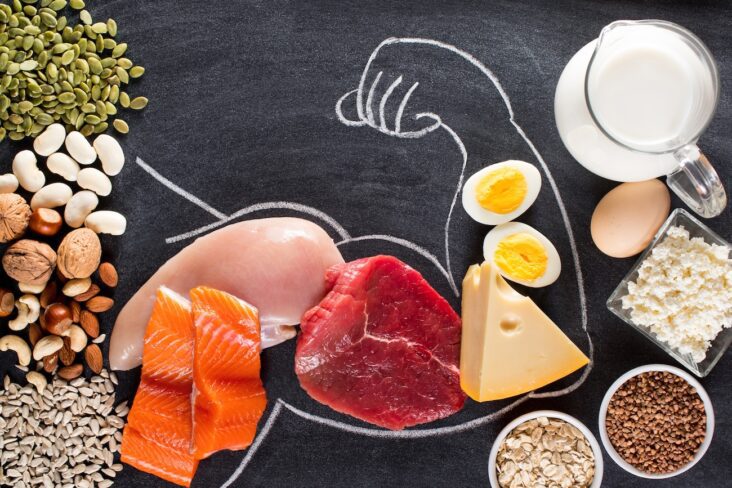
Protects muscle mass while VAT falls.
4. Ten-minute home strength plan
Simple, accessible, focused on legs and upper body — essential for midlife metabolic health.
5. Weekly tracking
Waist, weight, and muscle mass.
Simple numbers. Massive impact.
6. Sleep and stress support
Reduces inflammation and supports metabolic balance.
7. Optional GLP-1 support at six months
For those who need additional help, we add GLP-1 therapy carefully to support continued VAT reduction while safeguarding muscle mass.
This is not a crash diet.
It is a metabolic reset.
The N-of-1 Approach: Your Own Metabolic Experiment
Your metabolism is unique.
Your glucose curve is unique.
Your response to stress, food, sleep, and exercise is unique.
One-size-fits-all plans rarely work.
But tracking your own data lets you understand:
- what helps
- what hinders
- what your body truly responds to
This is the foundation of my new book N-of-1, built around the idea that the best treatment plan is the one tailored to your physiology.
Final Thoughts: Your Thyroid Isn’t Broken — Your Metabolic Environment Is Just Under Pressure
If you feel cold…
If your energy drops in winter…
If your waistline is growing…
If your weight feels “stuck”…
If ChatGPT told you that you might have an underactive thyroid…
Start with a simple TSH/FT4 test.
If it’s normal, your thyroid gland is almost certainly fine.
What’s far more likely — and far more fixable — is that visceral fat and inflammation are interfering with your metabolic signals.
And the solution is far more likely to be be VAT-reduction than thyroid medication.
VAT reduction involves personalised tracking, metabolic tools, and — where appropriate — GLP-1 support.
Your metabolism is not broken.
It simply needs the right environment to work properly again.
And that journey begins with you —
an N-of-1 experiment worth investing in.
Other related articles
Other related articles
- N-of-1: Why Your Best Health Plan Starts With You
- From Genes to Greens: How DNA Shapes Your Nutritional Needs
- Body fat distribution on computed tomography imaging and prostate cancer risk and mortality in the AGES-Reykjavik study 2019