
Three game changing technologies in 2023
As we begin 2024, I want to highlight three groundbreaking developments from 2023 that promise a brighter future for healthcare, two of which leverage the power of artificial intelligence (AI).
Providing independent clinical excellence since 2005

Posted on Thursday April 2, 2026 in Heart Rhythm Problems
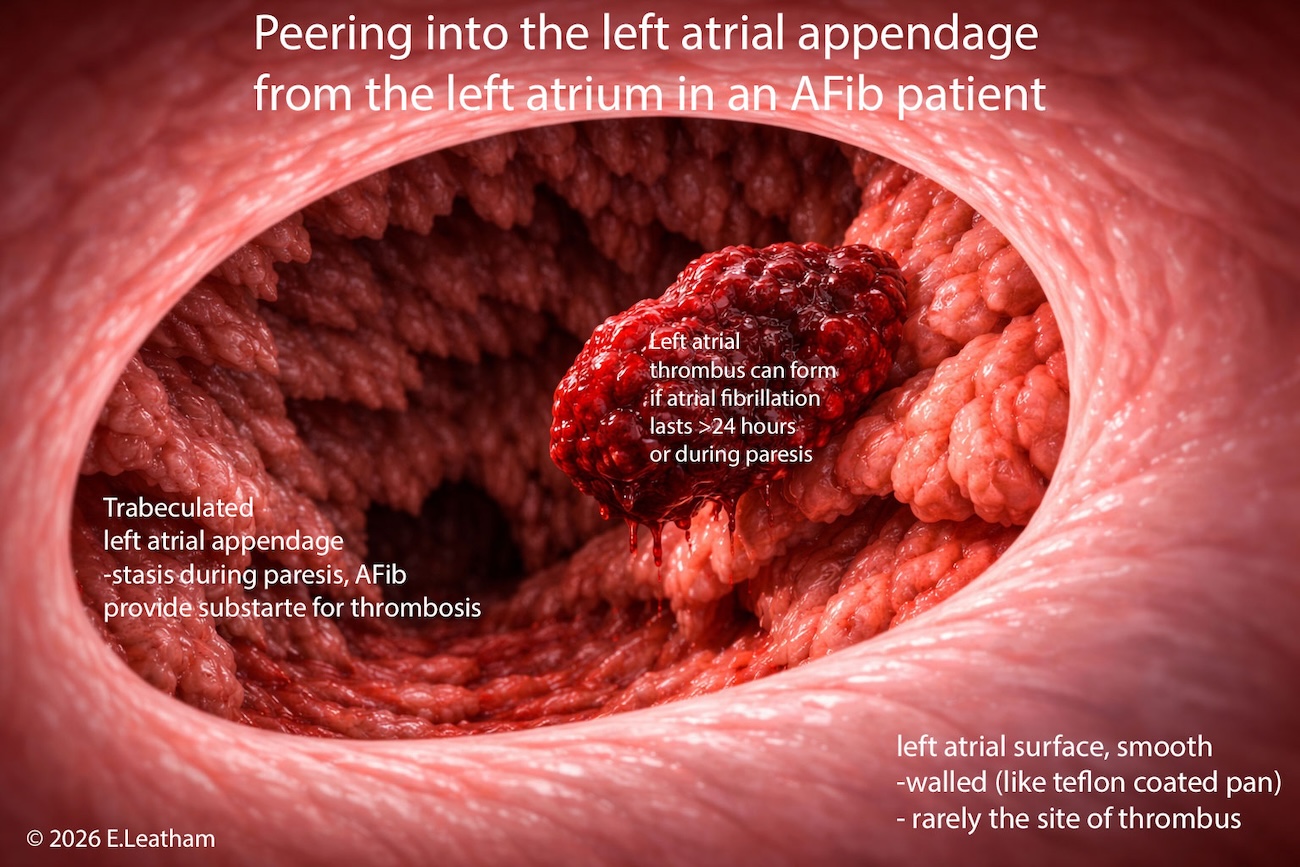
An article by Dr Edward Leatham, Consultant Cardiologist © 2026 E.Leatham
For busy people, or to tune in when on the move, Google Notebook AI audio podcast are available for this story beneath.
If you are diagnosed with atrial fibrillation (AF) or Atrial flutter (Aflutter), whether it is long term (accepted), atrial fibrillation/flutter, persistent atrial fibrillation/flutter or paroxysmal atrial fibrillation/flutter IF your CHA₂DS₂-VASc score is 2 or higher, current guidelines generally recommend long-term anticoagulation.
👉 You can calculate your CHA₂DS₂-VASc score here:
This is because AF and Aflutter increase the risk of stroke, and anticoagulants significantly reduce that risk.
A common and very reasonable question is:
“If I’ve only had one episode of paroxysmal atrial fibrillation (PAF), do I really need anticoagulants for life?”
The answer is:
👉 Not always—but it depends on several important factors.
Even a single documented episode of AF or flutter can be significant because:
For this reason, guidelines take a safety-first approach.
In carefully selected patients, anticoagulation may not be mandatory—particularly when the clinical picture is very clear.
This decision sits between two realities:
An important clinical observation:
This increases the risk of silent, prolonged episodes, which may shift the balance back toward anticoagulation.
For a patient with CHA₂DS₂-VASc ≥2 and a single PAF episode:
Rather than a rigid “yes or no” rule, this is a shared decision between patient and cardiologist—balancing:
As we begin 2024, I want to highlight three groundbreaking developments from 2023 that promise a brighter future for healthcare, two of which leverage the power of artificial intelligence (AI).

A 2026 BMJ systematic review confirms that weight regain is the rule after stopping pharmacological weight-management therapy. Across drug classes, most lost weight is regained within 24 months, with parallel loss of metabolic benefit. This reflects biological defence of adiposity, not patient failure.

Santa’s famous belly is festive, but it highlights an important metabolic lesson: WHERE fat is stored matters more than how it looks. Visceral fat, hidden deep around the organs, drives inflammation and cardiometabolic risk — unlike softer, subcutaneous fat. Understanding this difference is key to real metabolic health.