
Three game changing technologies in 2023
As we begin 2024, I want to highlight three groundbreaking developments from 2023 that promise a brighter future for healthcare, two of which leverage the power of artificial intelligence (AI).
Providing independent clinical excellence since 2005

Posted on Monday May 18, 2026 in Cardiovascular Prevention

Modern sedentary work creates visceral adipose tissue accumulation that drives insulin resistance and cardiovascular disease. This metabolically active fat wraps around vital organs, triggering inflammatory cascades that accelerate atherosclerosis. Understanding the mechanisms and implementing evidence-based interventions can prevent cardiovascular complications even in desk-bound professionals.
Sedentary work creates dangerous visceral fat that actively promotes cardiovascular disease through inflammatory pathways and insulin resistance. Prolonged sitting suppresses crucial enzymes and disrupts metabolism in ways that cannot be fully offset by exercise alone, requiring targeted workplace interventions.
01
The human cardiovascular system evolved for a life of intermittent activity and regular movement, not eight-hour stretches of motionless sitting. Yet this is precisely what millions of professionals endure daily, creating what I call the metabolic perfect storm. In my clinic, I see increasing numbers of relatively young, otherwise health-conscious patients whose sedentary occupations have quietly orchestrated a cascade of cardiovascular risk factors that would have been rare fifty years ago.
The villain in this story is visceral adipose tissue, the deep abdominal fat that accumulates around the liver, pancreas, and intestines when we maintain prolonged sedentary postures. Think of VAT as a metabolically hyperactive tissue factory rather than inert storage. Unlike the subcutaneous fat you can pinch, visceral fat actively secretes inflammatory cytokines, particularly interleukin-6 and tumour necrosis factor-alpha, creating a chronic low-grade inflammatory state that accelerates atherosclerosis.
The mechanism unfolds like a slow-motion cardiovascular catastrophe. Prolonged sitting reduces lipoprotein lipase activity in skeletal muscle by up to ninety percent within hours. This enzyme normally clears triglycerides from the bloodstream, so its suppression leads to lipid accumulation and insulin resistance. Meanwhile, reduced muscle glucose uptake forces the pancreas to secrete more insulin to maintain normal blood glucose levels. Chronic hyperinsulinaemia then promotes fat storage, particularly in the visceral compartment, while simultaneously driving smooth muscle cell proliferation in arterial walls.
The architectural analogy I use with patients is telling: imagine your cardiovascular system as a building designed for regular structural stress and movement. When you remove that stress through prolonged sitting, the supporting structures weaken while inflammatory debris accumulates in the foundation. The building doesn’t collapse immediately, but its structural integrity erodes steadily until seemingly minor stresses cause disproportionate damage.
02
The epidemiological evidence linking sedentary behaviour to cardiovascular disease is now overwhelming and consistent across populations. The landmark Nurses’ Health Study, following over 70,000 women for two decades, demonstrated that prolonged television viewing increased coronary heart disease risk by sixty-five percent independent of other risk factors. This finding was revolutionary because it showed that exercise alone couldn’t fully offset the metabolic damage of prolonged sitting.
More mechanistically precise research has revealed why this occurs. The British Heart Foundation’s SPACEFLIGHT study used sophisticated metabolomic analysis to show that just five days of bed rest in healthy volunteers triggered insulin resistance, dyslipidaemia, and markers of subclinical inflammation that persisted for weeks after resuming normal activity. The speed of these changes suggests that sedentary behaviour directly disrupts cellular metabolism rather than simply reducing fitness over time.
Recent trials examining interruptions to prolonged sitting have provided crucial clinical guidance. The groundbreaking work by Dunstan and colleagues demonstrated that breaking up prolonged sitting with two-minute walking breaks every thirty minutes improved postprandial glucose and insulin responses by twenty to thirty percent compared to uninterrupted sitting, even when total sitting time remained constant. This finding fundamentally changed how we understand the physiology of sedentary behaviour.
The cardiovascular imaging studies are particularly compelling. Research using coronary artery calcium scoring shows accelerated atherosclerosis in sedentary workers that correlates directly with visceral fat accumulation measured by CT scanning. The Multi-Ethnic Study of Atherosclerosis revealed that every additional hour of daily sitting increased coronary calcium progression by fourteen percent annually, independent of traditional risk factors including blood pressure, cholesterol levels, and smoking status.
Perhaps most importantly, intervention studies prove reversibility. The landmark Look AHEAD trial demonstrated that structured lifestyle interventions targeting sedentary behaviour could reduce cardiovascular events by up to twenty percent in high-risk individuals, with benefits appearing within two years of intervention initiation.
03
The clinical implications demand a fundamental shift in how we assess and manage cardiovascular risk in sedentary professionals. Traditional risk calculators like QRISK3 significantly underestimate cardiovascular risk in this population because they don’t adequately weight the metabolic consequences of prolonged sitting. I now routinely measure waist circumference and calculate waist-to-height ratios in all working-age patients, treating values above 0.5 as a red flag requiring immediate intervention.
The mistake most practitioners make is treating sedentary behaviour as simply reduced physical activity. This misses the point entirely. Prolonged sitting actively disrupts metabolism through distinct physiological pathways that cannot be fully reversed by exercising for thirty minutes after an eight-hour sedentary day. The analogy I use is smoking: you wouldn’t expect thirty minutes of deep breathing exercises to offset eight hours of cigarette exposure.
Instead, the focus must be on breaking up prolonged sitting throughout the workday. The evidence strongly supports frequent, brief interruptions rather than longer, less frequent breaks. I advise patients to implement what I call the 30-2 rule: every thirty minutes, stand and move for at least two minutes. This isn’t negotiable lunch-break exercise; it’s metabolic maintenance that should be as automatic as blinking.
Nutritional strategies become critically important in sedentary workers because their reduced muscle glucose uptake makes them particularly susceptible to postprandial hyperglycaemia and insulin spikes. I recommend avoiding high-glycaemic foods during working hours, focusing instead on protein and healthy fats that don’t trigger insulin surges. The timing of carbohydrate consumption matters enormously in sedentary individuals.
Environmental modifications in the workplace can be transformative. Standing desks, walking meetings, and strategically positioned printers force movement into the workday structure rather than relying on individual willpower. The most successful patients are those who engineer their environment to make movement inevitable rather than optional.
04
Sedentary professionals require cardiovascular specialist assessment when their occupational risk factors combine with other metabolic red flags or when initial interventions fail to improve key markers. The combination of prolonged sitting with emerging cardiovascular risk factors often requires specialist management because the metabolic disruption can be more severe than traditional risk scores suggest.
• Urgent referral: Waist-to-height ratio above 0.6 with diabetes or metabolic syndrome, blood pressure above 160/100 mmHg in sedentary workers under 50, or new-onset atrial fibrillation in desk-bound professionals without other clear precipitants • Routine referral: Sedentary workers with waist-to-height ratio above 0.5 plus two additional cardiovascular risk factors, persistent hypertension despite lifestyle modification, or strong family history of premature cardiovascular disease • Consider referral: Young sedentary professionals requesting cardiovascular risk stratification, difficulty implementing workplace movement strategies, or complex metabolic presentations requiring specialist lifestyle medicine input
1
Prolonged sitting actively disrupts metabolism through suppression of lipoprotein lipase and promotion of insulin resistance, creating cardiovascular risk independent of fitness levels.
2
Breaking up sitting with two-minute movement breaks every thirty minutes provides measurable metabolic benefits that cannot be achieved through longer, less frequent exercise sessions.
3
Waist-to-height ratio above 0.5 in sedentary workers indicates significant visceral fat accumulation and requires immediate lifestyle intervention regardless of other risk factors.
4
Traditional cardiovascular risk calculators underestimate risk in sedentary professionals because they don’t adequately account for the metabolic consequences of prolonged sitting behaviour.
1. Hamilton MT, Hamilton DG, Zderic TW. Role of low energy expenditure and sitting in obesity, metabolic syndrome, type 2 diabetes, and cardiovascular disease. Diabetes. 2007;56(11):2655-67. doi:10.2337/db07-0882
2. Healy GN, Dunstan DW, Salmon J, Cerin E, Shaw JE, Zimmet PZ, Owen N. Breaks in sedentary time: beneficial associations with metabolic risk. Diabetes Care. 2008;31(4):661-6. doi:10.2337/dc07-2046
3. Dunstan DW, Howard B, Healy GN, Owen N. Too much sitting–a health hazard. Diabetes Res Clin Pract. 2012;97(3):368-76. doi:10.1016/j.diabres.2012.05.020
4. Bergman RN, Kim SP, Catalano KJ, Hsu IR, Chiu JD, Kabir M, Hucking K, Ader M. Why visceral fat is bad: mechanisms of the metabolic syndrome. Obesity (Silver Spring). 2006;14 Suppl 1:16S-19S. doi:10.1038/oby.2006.277
5. Fontana L, Eagon JC, Trujillo ME, Scherer PE, Klein S. Visceral fat adipokine secretion is associated with systemic inflammation in obese humans. Diabetes. 2007;56(4):1010-3. doi:10.2337/db06-1656
6. Pedersen BK, Febbraio MA. Muscles, exercise and obesity: skeletal muscle as a secretory organ. Nat Rev Endocrinol. 2012;8(8):457-65. doi:10.1038/nrendo.2012.49
7. Bey L, Hamilton MT. Suppression of skeletal muscle lipoprotein lipase activity during physical inactivity: a molecular reason to maintain daily low-intensity activity. J Physiol. 2003;551(Pt 2):673-82. doi:10.1113/jphysiol.2003.045591
8. Després JP. Body fat distribution and risk of cardiovascular disease: an update. Circulation. 2012;126(10):1301-13. doi:10.1161/CIRCULATIONAHA.111.067264
9. Libby P, Ridker PM, Hansson GK. Progress and challenges in translating the biology of atherosclerosis. Nature. 2011;473(7347):317-25. doi:10.1038/nature10146
10. Yudkin JS, Stehouwer CD, Emeis JJ, Coppack SW. C-reactive protein in healthy subjects: associations with obesity, insulin resistance, and endothelial dysfunction: a potential role for cytokines originating from adipose tissue? Arterioscler Thromb Vasc Biol. 1999;19(4):972-8. doi:10.1161/01.ATV.19.4.972
11. Patterson R, McNamara E, Tainio M, de Sá TH, Smith AD, Sharp SJ, Edwards P, Woodcock J, Brage S, Wijndaele K. Sedentary behaviour and risk of all-cause, cardiovascular and cancer mortality, and incident type 2 diabetes: a systematic review and dose response meta-analysis. Eur J Epidemiol. 2018;33(9):811-829. doi:10.1007/s10654-018-0380-1
12. Wilmot EG, Edwardson CL, Achana FA, Davies MJ, Gorely T, Gray LJ, Khunti K, Yates T, Biddle SJ. Sedentary time in adults and the association with diabetes, cardiovascular disease and death: systematic review and meta-analysis. Diabetologia. 2012;55(11):2895-905. doi:10.1007/s00125-012-2677-z
13. Thorp AA, Owen N, Neuhaus M, Dunstan DW. Sedentary behaviors and subsequent health outcomes in adults a systematic review of longitudinal studies, 1996-2011. Am J Prev Med. 2011;41(2):207-15. doi:10.1016/j.amepre.2011.05.004
14. Katzmarzyk PT, Church TS, Craig CL, Bouchard C. Sitting time and mortality from all causes, cardiovascular disease, and cancer. Med Sci Sports Exerc. 2009;41(5):998-1005. doi:10.1249/MSS.0b013e3181930355
15. Levine JA, Lanningham-Foster LM, McCrady SK, Krizan AC, Olson LR, Kane PH, Jensen MD, Clark MM. Interindividual variation in posture allocation: possible role in human obesity. Science. 2005;307(5709):584-6. doi:10.1126/science.1106561
This article is for educational purposes only and does not constitute medical advice. Always consult a qualified healthcare professional. © 2026 Medicalspace Ltd / Surrey Cardiovascular Clinic
As we begin 2024, I want to highlight three groundbreaking developments from 2023 that promise a brighter future for healthcare, two of which leverage the power of artificial intelligence (AI).

Body recomposition focuses on reducing visceral fat while preserving muscle mass, offering superior cardiovascular protection compared to traditional weight loss. This approach proves particularly valuable for patients with coronary disease, those starting GLP-1 therapy, and adults over 60 facing age-related muscle loss.
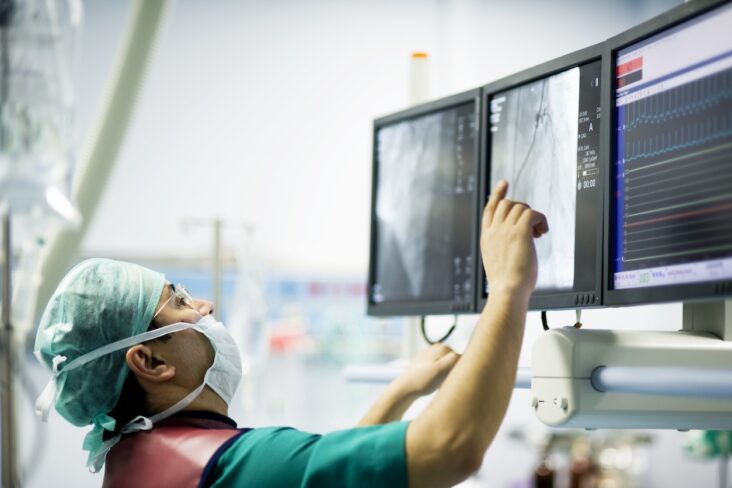
For much of modern cardiology, in its battle against coronary artery disease—one of mankind’s greatest threats—the “enemy” seemed clear. When I trained, the diagnostic armoury was focused on accurately identifying flow-limiting narrowing of one or more coronary arteries. Yet in the last decade, a profound paradigm shift has unsettled these foundations—and in some respects, turned them on their head.