An article written by Dr Edward Leatham, Consultant Cardiologist
— Clinical Insight —
BACKGROUND
I see patients like Ken regularly in my clinic — a 62-year-old gentleman with previous stents to his LAD and right coronary artery, on optimal medical therapy, yet still struggling with exertional symptoms and concerning blood pressure responses during exercise. His coronaries are patent, his medications are appropriate, yet something is driving his ongoing cardiovascular risk. The answer often lies hidden beneath the surface, wrapped around his heart and major vessels like a metabolically active blanket.
Dr Edward Leatham · Consultant Cardiologist · 12 May 2026
visceral fatprecision cardiologycoronary diseasemetabolic cardiologycardiovascular preventionglp1 agonists
Disclosure: This article is part of the SCVC Educational Series by Dr Edward Leatham and is intended for educational purposes for patients and clinicians. It does not constitute individual medical advice. Always consult your clinician.
Many patients with coronary disease continue to experience symptoms despite optimal medical therapy and successful revascularisation. The culprit is often visceral adipose tissue — metabolically active fat wrapped around the heart and major vessels that drives ongoing inflammation and atherosclerosis. Modern precision cardiology allows us to identify, quantify, and specifically target this hidden risk factor.
Summary
Visceral fat acts like a toxic factory wrapped around the heart, secreting inflammatory substances that drive ongoing atherosclerosis. Precision cardiology can now identify, quantify and specifically target this hidden cardiovascular risk factor in coronary disease patients.
I see patients like Ken regularly in my clinic — a 62-year-old gentleman with previous stents to his LAD and right coronary artery, on optimal medical therapy, yet still struggling with exertional symptoms and concerning blood pressure responses during exercise. His coronaries are patent, his medications are appropriate, yet something is driving his ongoing cardiovascular risk. The answer often lies hidden beneath the surface, wrapped around his heart and major vessels like a metabolically active blanket.
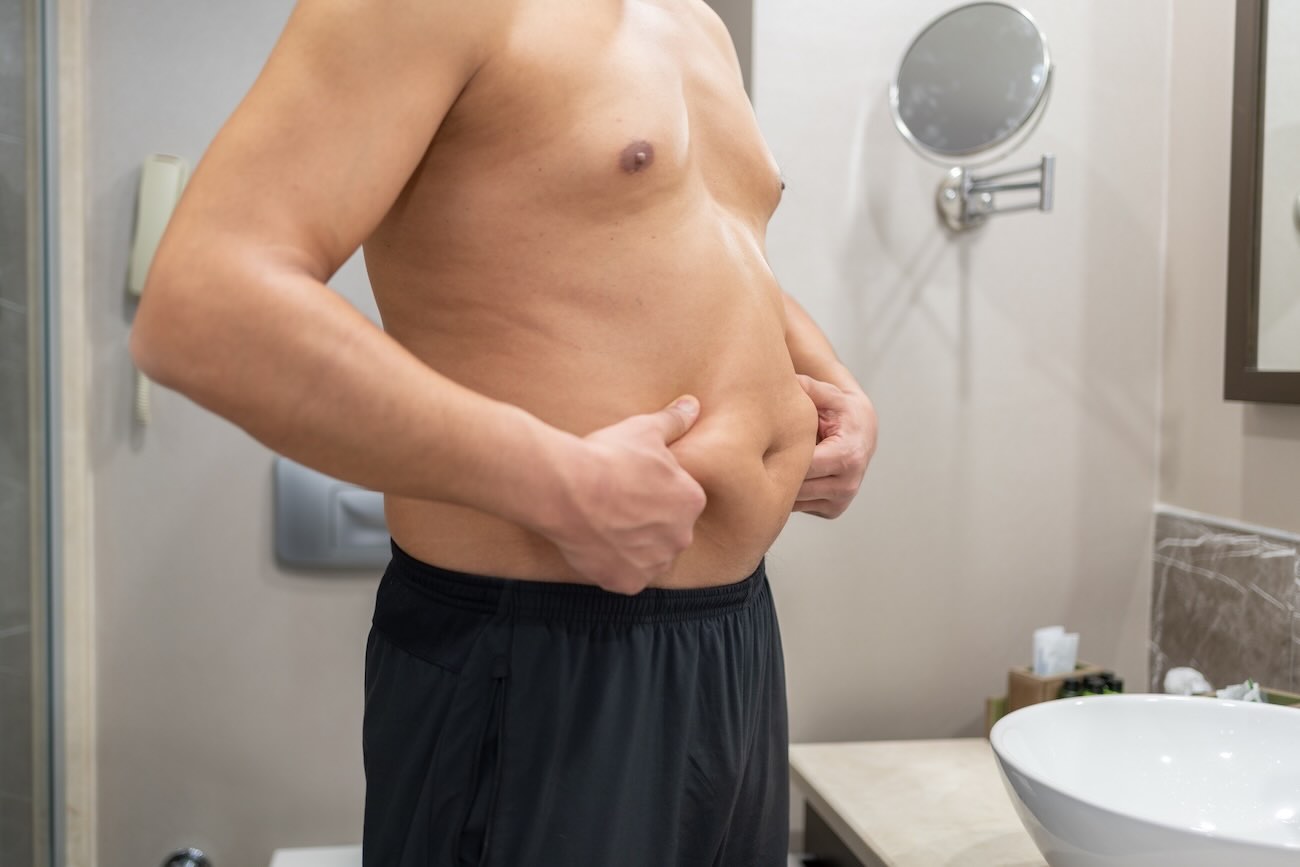
Visceral adipose tissue represents one of cardiology’s most underappreciated risk factors. Unlike the subcutaneous fat we can pinch, visceral fat behaves like an endocrine organ, secreting inflammatory cytokines, adipokines, and vasoactive substances directly into the portal circulation. Think of it as a toxic factory positioned at the very centre of cardiovascular physiology, pumping out substances that promote atherosclerosis, insulin resistance, and systemic inflammation around the clock.
The traditional approach to assessing cardiovascular risk has relied heavily on surrogate markers — cholesterol levels, blood pressure readings, smoking history. We have treated these patients with statins, antiplatelets, and ACE inhibitors, often achieving excellent biochemical control yet missing the fundamental driver of their disease process. This is rather like treating the smoke while ignoring the fire burning beneath.
What makes visceral adiposity particularly insidious in coronary disease is its direct anatomical relationship with the cardiovascular system. Unlike peripheral fat deposits, visceral fat surrounds the heart, infiltrates the pericardium, and extends along the coronary arteries themselves. This proximity means that inflammatory mediators and free fatty acids released from visceral adipocytes have immediate and direct effects on coronary endothelial function, plaque stability, and myocardial performance.
The waist-to-height ratio provides our first clinical clue — a simple measurement that costs nothing yet predicts cardiovascular outcomes more accurately than BMI alone. However, precision cardiology demands precision measurement, and this is where dedicated visceral fat CT scanning transforms our understanding of individual patients.
02
WHAT THE EVIDENCE SHOWS
The evidence linking visceral adiposity to cardiovascular outcomes has evolved from observational curiosity to mechanistic understanding to therapeutic opportunity. The landmark Framingham Heart Study demonstrated that visceral fat measured by CT scanning predicted cardiovascular events independently of traditional risk factors, with hazard ratios approaching those seen for diabetes and hypertension. More importantly, this relationship persisted even in patients with apparently normal BMI — the so-called metabolically obese, normal weight phenotype.
Recent mechanistic studies have revealed why this relationship is so robust. Visceral adipose tissue in patients with established coronary disease shows increased expression of inflammatory markers including TNF-alpha, interleukin-6, and C-reactive protein. These are not merely associations — functional studies demonstrate that conditioned media from visceral fat biopsies directly impairs endothelial function and promotes smooth muscle cell proliferation in laboratory models. The fat is quite literally talking to the arteries, and the conversation is inflammatory.
The EMPA-REG OUTCOME trial, while primarily focused on glycaemic control, provided crucial insights into visceral fat reduction. Patients treated with empagliflozin showed significant reductions in visceral fat volume on follow-up imaging, and this reduction correlated strongly with improvements in cardiovascular outcomes. The recent SURPASS-4 trial with tirzepatide has extended these findings, demonstrating that GLP-1 receptor agonists can reduce visceral fat by up to 30 percent while simultaneously improving insulin sensitivity and reducing inflammatory markers.
Perhaps most compelling are the intervention studies using direct visceral fat quantification. The Look AHEAD trial demonstrated that intensive lifestyle intervention targeting visceral fat reduction improved cardiovascular outcomes in diabetic patients, but only in those who achieved meaningful visceral fat loss as measured by CT or MRI. Patients who lost equivalent amounts of total weight without visceral fat reduction showed no cardiovascular benefit — a finding that fundamentally challenges our traditional approach to weight management in cardiac patients.
Current NICE guidelines acknowledge the importance of central obesity in cardiovascular risk assessment, but stop short of recommending routine visceral fat quantification. However, the evidence suggests we may be missing therapeutic opportunities by relying solely on waist circumference and BMI in our highest-risk patients.
The integration of visceral fat assessment into routine cardiac care requires a systematic approach that begins with recognition and progresses through quantification to targeted intervention. For patients like Ken, this means acknowledging that optimal medical therapy may be insufficient if we ignore the metabolic driver of his ongoing symptoms and cardiovascular risk.
The clinical pathway starts with basic anthropometric assessment — waist-to-height ratio measurement should become as routine as blood pressure recording in our cardiac patients. A ratio exceeding 0.5 suggests excess visceral adiposity and warrants further investigation, particularly in patients with ongoing symptoms despite apparent optimal therapy. This simple measurement costs nothing yet identifies patients who may benefit from precision intervention.
Visceral fat CT scanning represents the next step for selected patients. Unlike general abdominal CT, dedicated visceral fat protocols use low-radiation techniques to quantify both total and regional fat distribution. The key insight is not simply the total volume, but the ratio of visceral to subcutaneous fat and its anatomical relationship to cardiac structures. Patients with high visceral fat burden require fundamentally different therapeutic approaches than those with predominantly subcutaneous fat distribution.
The therapeutic implications extend beyond traditional lifestyle advice. Generic weight loss recommendations often fail in these patients because they lose muscle mass and subcutaneous fat while preserving metabolically active visceral deposits. Instead, we need targeted interventions that preferentially reduce visceral fat while preserving lean muscle mass. This requires protein intake calculation based on lean body mass measurement — typically 1.2 to 1.6 grams per kilogram of lean body weight — combined with resistance training and specific pharmacological interventions.
Modern GLP-1 receptor agonists like tirzepatide offer particular promise because they target visceral fat preferentially. Unlike traditional weight loss approaches, these medications appear to mobilise visceral fat stores while preserving lean muscle mass, particularly when combined with adequate protein intake. The result is metabolic improvement that translates into measurable cardiovascular benefit.
Visceral adiposity assessment and management in cardiac patients requires specialist input when simple measures prove insufficient or when precision quantification is needed to guide therapy. The approach should be systematic and evidence-based.
Consider specialist referral for patients with established coronary disease who demonstrate waist-to-height ratios exceeding 0.6, particularly if they have ongoing symptoms despite optimal medical therapy. Routine referral is appropriate for cardiac patients with metabolic syndrome who have failed to achieve meaningful visceral fat reduction after six months of conventional lifestyle intervention. Urgent specialist assessment is warranted for patients with acute coronary syndromes who demonstrate central obesity patterns, as these individuals require aggressive visceral fat targeting to prevent recurrent events.
• Urgent: Acute coronary syndrome patients with waist-to-height ratio >0.6 and evidence of metabolic syndrome • Routine: Established CAD patients with ongoing symptoms and central obesity pattern despite optimal medical therapy • Routine: Cardiac patients requiring visceral fat quantification to guide precision therapy • Consider: Post-PCI patients with suboptimal exercise tolerance and evidence of visceral adiposity • Consider: Cardiac rehabilitation patients who fail to improve despite good programme adherence
Key Takeaways
1
Visceral adipose tissue acts as a metabolically active endocrine organ that directly promotes atherosclerosis and cardiovascular risk through inflammatory mediator release.
2
Waist-to-height ratio measurement should be routine in cardiac patients, with ratios exceeding 0.5 warranting further visceral fat assessment and targeted intervention strategies.
3
Precision cardiology requires visceral fat CT quantification in selected patients to guide therapy, as total weight loss without visceral fat reduction provides no cardiovascular benefit.
4
Modern GLP-1 receptor agonists like tirzepatide offer targeted visceral fat reduction when combined with adequate protein intake based on lean body mass calculations.
References
1. Després JP, Lemieux I. Abdominal obesity and metabolic syndrome. Nature. 2006;444(7121):881-887. doi:10.1038/nature05488
2. Neeland IJ, Ross R, Després JP, et al. Visceral and ectopic fat, atherosclerosis, and cardiometabolic disease: a position statement. Lancet Diabetes Endocrinol. 2019;7(9):715-725. doi:10.1016/S2213-8587(19)30084-1
3. Antonopoulos AS, Sanna F, Sabharwal N, et al. Detecting human coronary inflammation by imaging perivascular fat. Sci Transl Med. 2017;9(398):eaal2658. doi:10.1126/scitranslmed.aal2658
4. Iacobellis G, Corradi D, Sharma AM. Epicardial adipose tissue: anatomic, biomolecular and clinical relationships with the heart. Nat Clin Pract Cardiovasc Med. 2005;2(10):536-543. doi:10.1038/ncpcardio0319
5. Marwan M, Achenbach S. Quantification of epicardial fat by computed tomography: why, when and how? J Cardiovasc Comput Tomogr. 2013;7(1):3-10. doi:10.1016/j.jcct.2013.01.002
6. Oikonomou EK, Marwan M, Desai MY, et al. Non-invasive detection of coronary inflammation using computed tomography and prediction of residual cardiovascular risk (the CRISP CT study): a post-hoc analysis of prospective outcome data. Lancet. 2018;392(10151):929-939. doi:10.1016/S0140-6736(18)31114-0
7. Christensen RH, Wedell-Neergaard AS, Lehrskov LL, et al. Effect of aerobic and resistance exercise on cardiac adipose tissues: secondary analyses from a randomized clinical trial. JAMA Cardiol. 2019;4(8):778-787. doi:10.1001/jamacardio.2019.2074
8. Sacks HS, Fain JN. Human epicardial adipose tissue: a review. Am Heart J. 2007;153(6):907-917. doi:10.1016/j.ahj.2007.03.019
9. Ridker PM, Everett BM, Thuren T, et al. Antiinflammatory therapy with canakinumab for atherosclerotic disease. N Engl J Med. 2017;377(12):1119-1131. doi:10.1056/NEJMoa1707914
10. Shah RV, Murthy VL, Abbasi SA, et al. Visceral adiposity and the risk of metabolic syndrome across body mass index: the MESA Study. JACC Cardiovasc Imaging. 2014;7(12):1221-1235. doi:10.1016/j.jcmg.2014.07.017
11. Britton KA, Massaro JM, Murabito JM, et al. Body fat distribution, incident cardiovascular disease, cancer, and all-cause mortality. J Am Coll Cardiol. 2013;62(10):921-925. doi:10.1016/j.jacc.2013.06.027
12. Thomas CE, Mauer EA, Shukla AP, et al. Low-volume high-intensity interval training reduces hyperglycemia and increases muscle mitochondrial capacity in patients with type 2 diabetes. J Appl Physiol. 2016;121(6):1307-1316. doi:10.1152/japplphysiol.00334.2016
13. Mazurek T, Zhang L, Zalewski A, et al. Human epicardial adipose tissue is a source of inflammatory mediators. Circulation. 2003;108(20):2460-2466. doi:10.1161/01.CIR.0000099542.57313.C5
14. Mahabadi AA, Massaro JM, Rosito GA, et al. Association of pericardial fat, intrathoracic fat, and visceral abdominal fat with cardiovascular disease burden: the Framingham Heart Study. Eur Heart J. 2009;30(7):850-856. doi:10.1093/eurheartj/ehn573
15. Fox CS, Massaro JM, Hoffmann U, et al. Abdominal visceral and subcutaneous adipose tissue compartments: association with metabolic risk factors in the Framingham Heart Study. Circulation. 2007;116(1):39-48. doi:10.1161/CIRCULATIONAHA.106.675355
Surrey Cardiovascular Clinic · www.scvc.co.uk/precision-cardiology-visceral-fat/
This article is for educational purposes only and does not constitute medical advice. Always consult a qualified healthcare professional. © 2026 Medicalspace Ltd / Surrey Cardiovascular Clinic