An article written by Dr Edward Leatham, Consultant Cardiologist © 2025 E.Leatham
For busy people, or to tune in when on the move, Google Notebook AI audio podcast and an explainer slide show are available for this story beneath.
Tags: VAT, Metabolic Health, NH1, search website using Tags to find related stories.
For years, most of us were taught a simple story about heart disease. Keep your cholesterol down, watch your blood pressure, don’t smoke, and stay active. If diabetes isn’t on your list of problems, you’re probably fine.
But in the last few years, something unexpected has happened.
Medicines originally designed for diabetes—SGLT2 inhibitors and GLP-1 receptor agonists—have shown major benefits in protecting the heart. The surprise?
They work even in people who don’t have diabetes.
This finding has forced doctors to look beyond sugar levels and ask a deeper question:
Why do “diabetes drugs” help people without diabetes at all?
The answer, increasingly, points to a powerful metabolic culprit: visceral fat, the hidden fat stored deep around the organs.
What Is Visceral Fat, and Why Does It Matter?
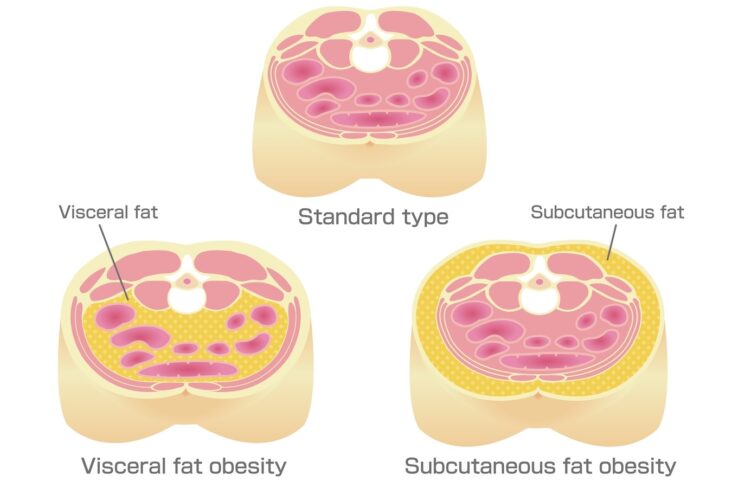
Visceral adipose tissue (VAT) is not the soft fat you can pinch. It’s the internal fat wrapped around the liver, pancreas, gut, and major blood vessels.
This type of fat behaves very differently. VAT:
- releases inflammatory chemicals
- disrupts the body’s insulin signalling
- stresses blood vessels
- feeds the metabolic chain reaction behind heart disease
You can have a completely “normal” weight and still have too much VAT. That is why waist measurement is often more revealing than BMI.
When VAT builds up, the risk curve bends sharply upwards.
Why Diabetes Medicines Help People Without Diabetes
1. SGLT2 inhibitors
These tablets prompt the kidneys to pass a small amount of sugar in the urine. The result:
- lower insulin levels
- lower blood pressure
- a shift towards fat-burning
- reduced strain on the heart
- and a preferential loss of visceral fat
2. GLP-1 receptor agonists
These medicines:
- reduce appetite
- smooth out glucose spikes after meals
- reduce inflammation
- improve blood vessel function
- help people lose more VAT than normal subcutaneous fat
So the benefits have little to do with having diabetes and everything to do with shrinking the most dangerous fat depot in the body.
A New Understanding of Heart Disease
For decades, heart disease was seen as a plumbing problem: arteries clog, blood flow drops, danger follows.
We now know the story begins much earlier.
VAT creates a metabolic environment that irritates blood vessels from the outside in. It builds silent inflammation, encourages glucose swings, and puts pressure on the heart long before a blockage appears.
Reducing VAT calms the entire system:
- inflammation falls
- insulin becomes more stable
- blood vessels relax
- plaques become less vulnerable
- blood pressure improves
In this light, it becomes clear why these medicines protect people without diabetes: they are cooling down the metabolic fire that burns beneath the surface.
The Heart–Brain Connection
There is another important piece of this story.
The heart and the brain are metabolic partners. They depend on the same blood supply, the same glucose stability, the same inflammatory balance, and the same metabolic health.
The same hidden forces that stiffen arteries and inflame the heart also affect memory, mood, cognition, and long-term brain resilience.
Which is why modern prevention is beginning to adopt a simple motto:
“What’s good for the heart is good for the brain.”
Everything that lowers visceral fat and smooths out glucose swings supports both organs:
- healthy eating patterns
- resistance training and muscle building
- steady sleep
- lower stress
- fewer glucose spikes
- stable insulin levels
- reduced VAT
Protect one, and you lift the other.
Can You Reduce VAT Without Medication?
Yes — and many people do.
VAT responds well to:
- moderate calorie reduction
- prioritising protein
- regular resistance training
- short bursts of higher-intensity exercise
- avoiding carb-heavy snacks
- eating fibre before carbohydrates
- tracking your waist size (not just your weight)
GLP-1 receptor agonists and SGLT2 inhibitors are powerful tools, but they work best on a foundation of healthy habits.
The Bottom Line
The new cardiology story is bigger than cholesterol or blockages. It is about metabolism, inflammation, insulin, and the internal fat around our organs.
SGLT2 inhibitors and GLP-1 receptor agonists didn’t just reshape diabetes care — they revealed a deeper truth about heart disease itself:
When you reduce visceral fat, the whole body becomes safer.
And the two organs that benefit most are the heart and the brain.
We may be entering a future where understanding your metabolism is just as important as knowing your cholesterol. And that shift has the power to protect your heart, preserve your brain, and change the course of ageing itself.
Technical papers: located in Dr Leatham’s “VAT Trap” Digital Companion and Resources
- Why So Many PCSK9 Mutations Exist — Evolution, Immunity, and Trade-Offs
- Bradford Hill’s Criteria for Causation Applied to LDL Cholesterol and Coronary Heart Disease
- A Bradford Hill Appraisal of Raised Visceral Adipose Tissue and Coronary Heart Disease:
Related posts
- Cholesterol, LDL, and what we learnt from PCSK9 mutations in familial hypercholesterolaemia
- So what does determine your LDL (‘bad’) Cholesterol?
- LDL: the lower the better
- How to Lose Visceral Adipose Tissue (VAT) and Improve Metabolic Health: A Guide to Sustainable Weight Loss
- Visceral Fat, Mitochondria, and the Energy Trap: Why We Store Fat Where We Shouldn’t
- Why everyone is talking about VAT