
Three game changing technologies in 2023
As we begin 2024, I want to highlight three groundbreaking developments from 2023 that promise a brighter future for healthcare, two of which leverage the power of artificial intelligence (AI).
Providing independent clinical excellence since 2005

Posted on Friday September 4, 2026 in News

A new tool on every SCVC article lets you interrogate the evidence behind our advice using your own AI assistant — here is how it works and why it matters.
Read with full references & citations here.
An article written by Dr Edward Leatham, Consultant Cardiologist
For busy people, or to tune in when on the move, a Google NotebookLM audio podcast is available as a story beneath.
Anyone who has read a thorough piece on, say, LDL cholesterol targets after a heart attack, or the relationship between visceral fat and cardiovascular risk, will recognise a familiar frustration. The information is there. The studies are cited. But finding the one paragraph that answers your specific question — does this apply to me at 62 with well-controlled hypertension but no prior events? — can feel like searching a textbook index without the index. This is not a failure of the article. It is simply the nature of written prose, which moves linearly through a topic rather than responding to the person reading it.
General practitioners face a version of this problem from the other direction. A patient arrives having read something online and asks a pointed question about a trial you may not have revisited since it was published. The information exists somewhere, but the consulting room is not the place to spend ten minutes locating it.
Cardiovascular medicine has changed substantially over the past two decades. The evidence base for lipid management alone — from the statin trials of the 1990s through to the PCSK9 inhibitor data from FOURIER and ODYSSEY OUTCOMES — is vast, and it moves. Guidelines are revised. Risk calculators are updated. What was standard practice five years ago may now be a position that NICE has formally superseded. The honest answer to many clinical questions is not a single sentence but a layered one: here is what the evidence says, here is how certain that evidence is, and here is where reasonable clinicians still disagree.
That layered kind of answer is exactly what a structured AI interaction can provide — provided the AI is working from reliable, clearly graded source material rather than the open internet.
Behind the Ask the Evidence link at the top of our longer articles is a plain text file. It will not look like a webpage when you open it, and that is intentional. It is not designed for human eyes in the way the article itself is. It is structured specifically so that an AI assistant can parse it accurately and use it as the sole basis for answering your questions.
The file contains the same content as the article, but with two additions that matter considerably. First, every significant claim is tagged with an evidence grade: established, strong, moderate, emerging, or the author’s working hypothesis. This is not cosmetic. It is the difference between an AI telling you that high-sensitivity CRP predicts cardiovascular events as if this were settled doctrine, and an AI correctly telling you that the evidence is strong but that whether treating inflammation directly improves outcomes remains an active area of research. Collapsing that distinction — presenting a plausible hypothesis as established fact — is one of the ways health information causes harm, and the grading system is our attempt to prevent it.
Second, the file includes the full reference list from the article. This means that when the AI points you to a finding, it can also point you to the actual study behind it, rather than generating a plausible-sounding citation that may not exist. Anyone who has used an AI assistant for research will know that fabricated references are a genuine hazard. Anchoring the AI to a pre-verified reference list removes that risk within the scope of our articles.
The file also includes a short set of instructions for the AI, telling it to stay within the article’s evidence, to flag where guidelines genuinely disagree, and to remind the reader that the information is educational rather than a substitute for clinical assessment.
The process takes under two minutes. Click the Ask the Evidence link at the top of the article — it opens the structured text file directly. Select all of the text and copy it. Then paste it into whichever AI assistant you use, whether that is ChatGPT, Claude, or another, followed by your specific question. Something like: based on this article, what does the evidence say about starting a statin at my age if I have no prior cardiovascular events but a family history of early heart disease? Or, as a GP, you might ask: what does this article say about the threshold at which the NICE guidance recommends treatment, and where does clinical judgement still apply?
The AI will answer using the article’s own evidence and reasoning. Because the source material is in front of it, it is not drawing on the general internet or combining your question with whatever else it has encountered in training. The answer is traceable. You can read the relevant section of the article yourself and check it.
Some of our articles include a Copy for your AI button that performs the copy step automatically and prepends the instruction set the AI needs. Where that button is present, the process is reduced to paste and ask.
For patients, this means the ability to ask the question that was not quite answered by the article — the personal, specific, what-does-this-mean-for-me question that every good clinical encounter eventually reaches. For GPs, it means a way to quickly locate and verify the evidence behind a particular recommendation without leaving the consulting room, or to prepare a clear explanation for a patient who wants to understand why their treatment has been adjusted.
The straightforward answer is that we would rather you receive an answer that is traceable back to a real study than a confident-sounding response assembled from the internet at large. AI assistants are extraordinarily useful, but their default behaviour — drawing on everything they have encountered in training, blending sources of wildly varying quality, and presenting the result with uniform confidence — is not well suited to clinical information, where the difference between an established finding and an emerging hypothesis can have real consequences for a patient’s decision-making.
The evidence grading system is our response to that. It asks the AI to be transparent about certainty in the same way that a good clinician is transparent: not hedging everything into meaninglessness, but being precise about where the ground is firm and where it is not. The instruction set accompanying each file reinforces this, specifically directing the AI never to blur a hypothesis into a fact and to flag where guidelines from different bodies — NICE, ESC, ACC/AHA — take different positions, as they sometimes do.
This is, in the end, an extension of the same principle that runs through our articles themselves. Cardiovascular medicine done well is not about delivering a verdict. It is about helping a patient or a clinician understand the evidence well enough to make a genuinely informed decision. The Ask the Evidence tool is an attempt to make that possible even after the article ends and the specific, personal question begins.
1. The Ask the Evidence tool gives readers and clinicians a way to interrogate the evidence behind our articles with specific personal questions, rather than searching prose for a single relevant paragraph.
2. Every claim in the structured evidence file is graded by strength of evidence, which prevents AI assistants from presenting an emerging hypothesis with the same confidence as an established finding — a distinction that matters in clinical decision-making.
3. The full reference list is embedded in the file so that any study the AI cites can be traced back to a real, verifiable source rather than a generated citation.
4. The tool does not replace clinical assessment, and the instruction set accompanying each file explicitly reminds the AI to say so — its purpose is to make educational information more accessible and more precisely answerable, not to substitute for a consultation.
5. © Medicalspace Ltd · Surrey Cardiovascular Clinic · scvc.co.uk
Our longer cardiovascular articles now carry a structured evidence file readable by AI assistants like ChatGPT or Claude. Ask your specific question, get an answer tied to real studies. This piece explains how the tool works, why evidence grading matters, and how to use it in under two minutes.
As we begin 2024, I want to highlight three groundbreaking developments from 2023 that promise a brighter future for healthcare, two of which leverage the power of artificial intelligence (AI).
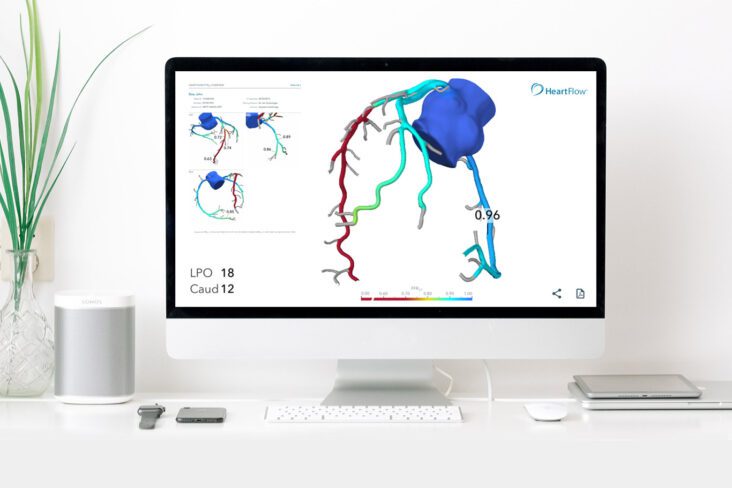
Since 2016, cardiologists have been utilising the HeartFlow Analysis in conjunction with cardiac CT scans to enhance the accuracy and predictive value of noninvasive coronary imaging. This technology allows many patients to avoid unnecessary invasive angiography, reducing the associated risks and stress.

For a cardiologist, beta blockers are a commonly used medication, possibly because we live in a high stress world and patients come to us with symptoms that are often improved by moderating the biological effects of our own adrenaline on the systems it was designed to protect.